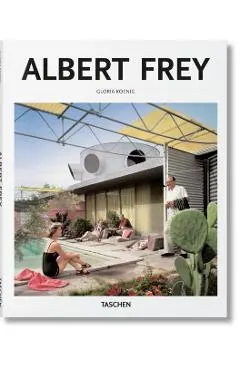
Albert Frey
nArchitect Albert Frey (1903-1998) saw a modernist utopia in the desert.
Istoric în construcțieEvoluția prețului
Istoricul de preț se construiește — mai avem nevoie de câteva zile de monitorizare pentru un grafic relevant.
Ce arată măsurătorile noastre
istoric în construcțieCifrele sunt calculate exclusiv din prețurile înregistrate de noi, zilnic, la magazinele monitorizate.
Graficul arată cel mai mic preț disponibil în fiecare zi, între toate magazinele monitorizate. Linia verde este minimul din ultimele 30 de zile.
Îți trimitem un e-mail când prețul scade sub —. Îți cerem o confirmare pe e-mail înainte de a-ți trimite orice alertă și te poți dezabona oricând.
Despre acest produs
nArchitect Albert Frey (1903-1998) saw a modernist utopia in the desert. Born in Zurich, he studied in Europe with Le Corbusier before moving to the United States in 1930, convinced it was the land of architectural opportunity. On a visit to Palm Springs, he fell under the desert spell. It was here, amid the arid and empty landscape, that he could truly envisage a perfect modern future.
Like fellow Californian luminary, John Lautner, Frey would spend the rest of his career nurturing the consonance of architecture and nature: studying the fall of sunlight and rain, and merging aluminum, steel, and glass with the boulders and sands of the West Coast wilds. His vision centered in particular on Palm Springs, capitalizing on the city's postwar population boom to create a bastion of the sleek, leisurely modernism that defines midcentury California.
In this dependable architect introduction, we follow Frey's long and prestigious career from his European beginnings through to the apogee of his Californian practice, taking in his notes on De Stijl, Le Corbusier, and Bauhaus, and exploring the stylistic, material, and geographic makings of his unique desert modernism. nArchitect Albert Frey (1903-1998) saw a modernist utopia in the desert. Born in Zurich, he studied in Europe with Le Corbusier before moving to the United States in 1930, convinced it was the land of architectural opportunity. On a visit to Palm Springs, he fell under the desert spell. It was here, amid the arid and empty landscape, that he could truly envisage a perfect modern future.
Like fellow Californian luminary, John Lautner, Frey would spend the rest of his career nurturing the consonance of architecture and nature: studying the fall of sunlight and rain, and merging aluminum, steel, and glass with the boulders and sands of the West Coast wilds. His vision centered in particular on Palm Springs, capitalizing on the city's postwar population boom to create a bastion of the sleek, leisurely modernism that defines midcentury California.
In this dependable architect introduction, we follow Frey's long and prestigious career from his European beginnings through to the apogee of his Californian practice, taking in his notes on De Stijl, Le Corbusier, and Bauhaus, and exploring the stylistic, material, and geographic makings of his unique desert modernism.
About the seriesEach book in TASCHEN's Basic Architecture series features: an introduction to the life and work of the architectthe major work
Descriere preluată din fișa produsului de la Libris.
Produse similare din Alte cărți
Vezi categoria →