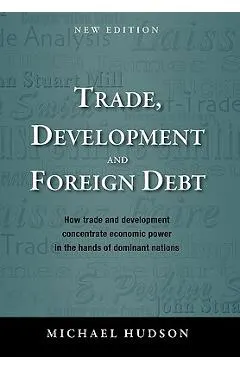
Trade, Development and Foreign Debt
nIn this survey of international economic thought, Michael Hudson rewrites the history of trade, development and debt theorizing.
La minimul din 30 de zileCel mai bun preț din fiecare magazin
| Magazin | Preț | Istoric | |
|---|---|---|---|
LB Libris ISBN 9783980846691 |
217,91 lei | la minimul propriu | Vezi în magazin |
Prețurile sunt preluate automat din feed-urile magazinelor și pot varia; prețul valabil este cel din magazin, la finalizarea comenzii. Linkurile către magazine sunt linkuri de parteneriat — nu îți schimbă prețul și nu influențează ordinea ofertelor.
Evoluția prețului
Istoricul de preț se construiește — mai avem nevoie de câteva zile de monitorizare pentru un grafic relevant.
Ce arată măsurătorile noastre
- Cel mai mic preț înregistrat de noi
- 217,91 lei
- Preț mediu în perioada monitorizată
- 217,91 lei
- Zile de când îl urmărim
- 3
- Schimbări de preț înregistrate
- 1 (1 în ultimele 30 de zile)
Toate cifrele de mai sus sunt calculate exclusiv din prețurile pe care le-am înregistrat noi, zilnic, de la magazinele monitorizate.
Graficul arată cel mai mic preț disponibil în fiecare zi, între toate magazinele monitorizate. Linia verde este minimul din ultimele 30 de zile.
Îți trimitem un e-mail când prețul scade sub 217,91 lei. Îți cerem o confirmare pe e-mail înainte de a-ți trimite orice alertă și te poți dezabona oricând.
Despre acest produs
nIn this survey of international economic thought, Michael Hudson rewrites the history of trade, development and debt theorizing. He shows that mainstream free-trade surveys are censorial in excluding the protectionist logic that has guided the trade policy of Europe and the United States, especially by leaving out discussion of the transfer problem and payment of international debts. He points out that most economists throughout history have focused as much on war financing as on trade and development. Free-trade ideology and IMF-style financial austerity under today's rules, rather than benefiting all parties and maximizing welfare, leave client nations severely indebted. By excluding dynamics that used to be central to trade theory such as emigration and technology transfer, today's global production and financial policies tend to concentrate economic and political power in the hands of dominant nations. Prof. Michael Hudson (Economics Department, University of Missouri, Kansas City) is a frequent contributor to The Financial Times, Counterpunch, and Global Research.
Descriere preluată din fișa produsului de la Libris.
Alte cărți de Michael Hudson


Produse similare din Business & economie
Vezi categoria →