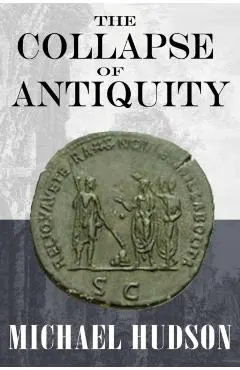
The Collapse of Antiquity
n nThe Collapse of Antiquity: Greece and Rome as Civilization's Oligarchic Turning Point n n n nThe Collapse of Antiquity, the sequel to Michael's ...and forgive them their debts, is the second and latest book…
A fost și mai ieftin — l-am prins la 231,14 leiCum s-a mișcat prețul
Ce am observat noi
peste minimToate cifrele de mai sus ies din ce am notat noi, în fiecare noapte. Nu le-am luat de nicăieri.
În fiecare zi luăm cel mai mic preț dintre toate magazinele și îl punem pe grafic. Linia verde e cel mai jos a coborât în ultima lună.
Lasă-ne adresa și îți scriem dacă scade sub —. Un singur e-mail, când chiar se întâmplă ceva. Îți cerem întâi o confirmare, și te poți retrage oricând dintr-un click.
Ediții identificate (2)
Ce zice magazinul despre el
n nThe Collapse of Antiquity: Greece and Rome as Civilization's Oligarchic Turning Point n n n nThe Collapse of Antiquity, the sequel to Michael's ...and forgive them their debts, is the second and latest book in his trilogy on the history of debt. It describes how the dynamics of interest-bearing debt led to the rise of rentier oligarchies in classical Greece and Rome, causing economic polarization, widespread austerity, revolts, wars and ultimately the collapse of Rome into serfdom and feudalism. That collapse bequeathed to subsequent Western civilization a pro-creditor legal philosophy that has led to today's creditor oligarchies. n n n nIn telling this story, The Collapse of Antiquity reveals the eerie parallels between the collapsing Roman world and today's debt-burdened Western economies. n nEndorsements n n n nScope n nThe Collapse of Antiquity is vast in its sweep, covering: n n- the transmission of interest-bearing debt from the Ancient Near East to the Mediterranean world, but without the safety valve of periodic royal Clean Slate debt cancellations to restore economic balance and prevent the emergence of creditor oligarchies; n- the rise of creditor and landholding oligarchies in classical Greece and Rome; n- classical antiquity's debt crises and revolts, and the suppression, assassination and ultimately failure of reformers; n- the role played by greed, money-lust (wealth-addiction) and hubris, as analysed by Socrates, Plato, Aristotle and other ancient writers; n- Rome's End Time collapse into serfdom and pro-creditor oligarchic legacy that continues to shape the West; n- the transformation of Christianity as it became Rome's state religion, supporting the oligarchy, dropping the revolutionary early Christian calls for debt cancellation and changing the meaning of the Lord's Prayer and sin, from a focus on the economic sphere to the personal sphere of individual egotism; n- how pro-creditor ideology distorts recent economic interpretations of antiquity, showing increasing sympathy with Rome's oligarchic policies. n nn n nn
Descrierea e luată de la Libris.
Produse similare din Business & economie
Vezi categoria →