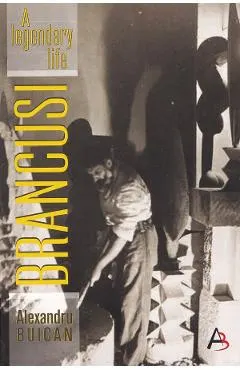
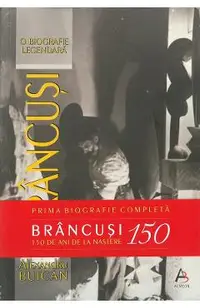
Brancusi, a Legendary Life
Foreword Why isn't there a biography of Brancusi yet?
Încă îl urmărimUnde cât costă
| Magazin | Preț | Istoric | |
|---|---|---|---|
LB Libris ISBN 9786069577516 |
177,60 lei | la minimul propriu | Vezi în magazin |
Prețurile vin automat din listele magazinelor și se mai schimbă între timp. Cel care contează e cel din coșul magazinului, la plată. Linkurile către magazine sunt de parteneriat: dacă cumperi, luăm un comision de la magazin. Pe tine nu te costă nimic în plus, iar ordinea de mai sus e strict după preț.
Cum s-a mișcat prețul
Ce am observat noi
la minimToate cifrele de mai sus ies din ce am notat noi, în fiecare noapte. Nu le-am luat de nicăieri.
În fiecare zi luăm cel mai mic preț dintre toate magazinele și îl punem pe grafic. Linia verde e cel mai jos a coborât în ultima lună.
Lasă-ne adresa și îți scriem dacă scade sub 177,60 lei. Un singur e-mail, când chiar se întâmplă ceva. Îți cerem întâi o confirmare, și te poți retrage oricând dintr-un click.
Întrebări frecvente
Cât costă Brancusi, a Legendary Life?
Cel mai ieftin îl găsești la Libris, cu 177,60 lei. Verificăm cifra în fiecare zi, direct din lista de prețuri a magazinului.
Este reducerea la Brancusi, a Legendary Life una reală?
Sincer? Încă nu știm. Îl urmărim de 18 zile, iar ca să spunem ceva serios despre ultima lună ne trebuie măcar o săptămână de cifre proprii. Revino peste câteva zile.
Care a fost cel mai mic preț la Brancusi, a Legendary Life?
Cel mai ieftin l-am prins la 177,60 lei — adică exact cât costă azi. Îl urmărim de 18 zile.
Ce zice magazinul despre el
Foreword Why isn't there a biography of Brancusi yet? We have asked ourselves this question seventeen years ago and find it as bewildered as it referred to a sculptor of whom it was said: Next to Shakespeare and Beethoven, there is yet a god: and that is the Romanian Constantin Brancusi; or The history of sculpture, in Europe, measures only three landmarks: Phidias-Michelangelo-Brancusi. And soon this bewilderment turned to frustration. We had to admit, then, that such a biographical attempt is not in the least easy. First of all, the one who dares approach such a task should have access to several cultures: Romanian, French, and, although Brancusi lived almost half a century in France, especially American. For most of his life, the sculptor was in a position to live physically in France, but to be financially dependent on his American patrons. And not only that. His recognition came in 1913 at the famous Armory Show in New York. And the extraordinary celebrity that followed was brought to him by the even more famous Bird trial, known as Brancusi v. United States, which also took place in the US. The enthusiasm with which Brancusi was embraced by the Americans was incredible. Therefore, a very large number of the most important names of American culture wrote about him, leaving to posterity a vast body of memories outside of which Constantin Brancusi's biography cannot be written. Naturally, the attempt should have come from the Romanians, whose interest in such an illustrious representative born amongst them is somewhat greater. But the political context surrounding Romania after the Second World War couldn't have favored the appearance of a Brancusi biographer. The Iron Curtain between Romania and those cultures where Brancusi became renowned cut back the number of people who were allowed to travel and made research almost impossible. And the ideological attacks that transformed the famous sculptor of The Bird, for decades, following his death, into an outcast artist, made the mission extremely difficult from the start. For the researchers outside Romania, the same factors acted in the opposite direction. To them, those formation years and especially that intimate, physical, and psychical environment Brancusi came out of remained impenetrable. And, foremost, in addition to the many historical difficulties came the greatest difficulty of all: the uniqueness of the subject itself. From the very beginning, we must state that the real motivation behind this biographical attempt lies within the interest that Brancusi's work has stirred within us from the very early times of our lives. The spectacle of Brancusi's art has been a revelation to us, thus imposing itself as truth from the first impact it had on us. (After all, we are writing Brancusi's biography half a century after his disappearance, because he is the one who created The Birds, The Kiss, The Column, and his portraits). But revelation doesn't imply understanding, and upon trying to clarify what the truth of his art resides in, we find ourselves confronted with difficulties. What appears to us as particularly astonishing is the wide variety of exegetic opinions, a variety which is a mere testimony to the fact that we are facing a grand creation. As we believe that his work is best explained by the biographical incident (It is not hard to do my work, Brancusi used to say, it is hard to put myself in the situation of doing it), we have first tried to understand that ensemble of soul and thought this grand creation came out of. And then the variety of interpretations of the man appeared to us even more astonishing than those of his work. To the one who reads brancusian literature, it is immediately obvious that Brancusi's personality, through its originality, not to say its exoticness, appeared to the critics as hard to scrutinize and assemble in one unifying formula. The sculptor's personality has been explained in various manners, the diverse formulas given are the most contradictory. He has been successively talked about as a Platonist, a peasant, a saint, an eccentric character, and many more. We have read these formulas with great interest (our conscience obliged us, during the conceiving of this book, to read as much as possible of what had been written about him), and thus we came upon some very interesting interpretations. But as each of these interpretations had a measure of truth in it, so it appeared to us as having a measure of falseness. We have consequently come across a Brancusi mystery. It has then clearly imposed on us the truth that unraveling the Brancusi mystery cannot be done in pieces. Therefore, we have strengthened our belief that the vast variety of suggested solutions, as well as the disconcerted observable behind these attempts, is to a certain degree the consequence of the absence of the biography. And it is obvious that almost everyone who wrote about Brancusi's works had felt this absence, for they tried to bring to the surface, to some extent, the sculptor's existence, giving either various portraits or more or less precise chronologies. No more than that. Moreover, writing a biography isn't a task for anyone, but a task for the one who heard the inner call of bringing back to life Brancusi, the man. Therefore the biography did not appear. The writing of this book raised many problems of which I will mention only a few. The reader wants to know from the very beginning which type of biography ours is. It is usually believed that there are two main biographical schools. The first is the erudite one, consisting of a series of dates discussed over thoroughly by the authors, usually professors afraid of being accused of vulgarization or popularization. The other one is the artistic one, whose representatives want the hero to live throughout the pages of the book. These authors are afraid that their work will remain otherwise unknown to the general public. The two schools appear to legitimately exclude one an
Descrierea e luată de la Libris.
Alte cărți de Alexandru Buican

Produse similare din Cărți în limbi străine
Vezi categoria →