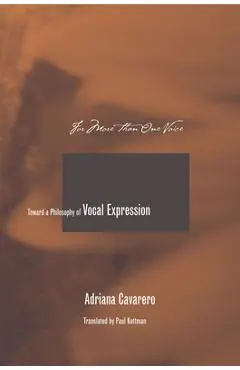
For More Than One Voice: Toward a Philosophy of Vocal Expression
nThe human voice does not deceive. The one who is speaking is inevitably revealed by the singular sound of her voice, no matter what she says.
Încă îl urmărimCum s-a mișcat prețul
Deocamdată n-avem ce desena — mai lăsăm câteva zile de notat și apare graficul.
Ce am observat noi
la minimToate cifrele de mai sus ies din ce am notat noi, în fiecare noapte. Nu le-am luat de nicăieri.
În fiecare zi luăm cel mai mic preț dintre toate magazinele și îl punem pe grafic. Linia verde e cel mai jos a coborât în ultima lună.
Lasă-ne adresa și îți scriem dacă scade sub —. Un singur e-mail, când chiar se întâmplă ceva. Îți cerem întâi o confirmare, și te poți retrage oricând dintr-un click.
Ce zice magazinul despre el
nThe human voice does not deceive. The one who is speaking is inevitably revealed by the singular sound of her voice, no matter what she says. We take this fact for granted--for example, every time someone asks, over the telephone, Who is speaking? and receives as a reply the familiar utterance, It's me. Starting from the given uniqueness of every voice, Cavarero rereads the history of philosophy through its peculiar evasion of this embodied uniqueness. She shows how this history--along with the fields it comprehends, such as linguistics, musicology, political theory, and studies in orality--might be grasped as the devocalization of Logos, as the invariable privileging of semantike over phone, mind over body. Female figures--from the Sirens to the Muses, from Echo to opera singers--provide a crucial counterhistory, one in which the embodied voice triumphs over the immaterial semantic. Reconstructing this counterhistory, Cavarero proposes a politics of the voice wherein the ancient bond between Logos and politics is reconfigured, and wherein what matters is not the communicative content of a given discourse, but rather who is speaking.
Descrierea e luată de la Libris.
Produse similare din Cărți în limbi străine
Vezi categoria →