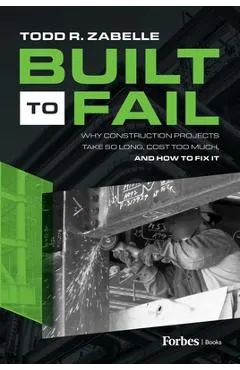
Built to Fail: Why Construction Projects Take So Long, Cost Too Much, and How to Fix It
The construction industry is as big as it is important.
La minimul din 30 de zileCel mai bun preț din fiecare magazin
| Magazin | Preț | Istoric | |
|---|---|---|---|
LB Libris ISBN 9798887501581 |
148,75 lei | la minimul propriu | Vezi în magazin |
Prețurile sunt preluate automat din feed-urile magazinelor și pot varia; prețul valabil este cel din magazin, la finalizarea comenzii. Linkurile către magazine sunt linkuri de parteneriat — nu îți schimbă prețul și nu influențează ordinea ofertelor.
Evoluția prețului
Istoricul de preț se construiește — mai avem nevoie de câteva zile de monitorizare pentru un grafic relevant.
Ce arată măsurătorile noastre
la minimul din 30 de zileCifrele sunt calculate exclusiv din prețurile înregistrate de noi, zilnic, la magazinele monitorizate.
Graficul arată cel mai mic preț disponibil în fiecare zi, între toate magazinele monitorizate. Linia verde este minimul din ultimele 30 de zile.
Îți trimitem un e-mail când prețul scade sub 148,75 lei. Îți cerem o confirmare pe e-mail înainte de a-ți trimite orice alertă și te poți dezabona oricând.
Despre acest produs
The construction industry is as big as it is important. Without construction, our society would cease to be. We would have no ports, roads, or bridges. No communications networks, power grids, or water systems. No hospitals. No schools. No homes. But we can barely get anything built. Capital projects are routinely finished late and over budget. Everyone acknowledges the problem, but no one seems to have the vision, or the will, to fix it. The problem is the separation of planning from doing that has taken place over the last century. A misplaced focus on administration has marginalized the tasks of designing and building, which are the essence of construction. New techniques and cutting-edge technology provide us with a different way of doing things. This is not mere theory; as author Todd Zabelle demonstrates, his company and other innovative firms are doing it now. But because too many construction professionals are set in their ways or are profiting from an ineffective system, nothing changes. By drawing on operations science and focusing on the critical aspects of construction and on how we design, make, and build instead of administration, we can fix what has dogged the industry for decades while expanding the bottom line of owners, investors, and construction managers. As Built to Fail argues, - we must recognize projects as an assemblage of multiple production systems and use operations science to understand and influence their behavior and thus improve project outcomes. n - the Taylorist preoccupation with squeezing as much work out of workers as possible is counterproductive. Having materials waiting on workers is avoided at all costs over workers waiting on materials, but we don't need to choose between these two options. When it comes to supply, we can replace just in case (stacking up inventory) with just in time (delivering supplies when and where they are needed). n - the separation of design from construction and the fallacy that design is a phase that can be finished has contributed to the problem. Design is an ongoing process through the life of the project. n - deployment is changing from a centralized model to a decentralized one: instead of a project situated in one location, headed by one design firm and a single lead contractor and regulated by one permit, we must contend with multiple locations and jurisdictions, governed by numerous permits, various suppliers, and a multiplicity of design firms. n - the future
Descriere preluată din fișa produsului de la Libris.
Produse similare din Business & economie
Vezi categoria →