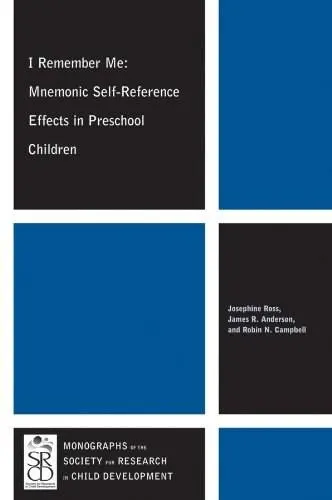
I Remember Me
It is well established that children recognize themselves in mirrors by the end of infancy, showing awareness of the self as an object in the environment.
La cel mai bun preț din ultima lună (143,00 lei)Unde cât costă
| Magazin | Preț | Istoric | |
|---|---|---|---|
CĂ Cărturești |
143,00 lei | la minimul propriu | Vezi în magazin |
Prețurile vin automat din listele magazinelor și se mai schimbă între timp. Cel care contează e cel din coșul magazinului, la plată. Linkurile către magazine sunt de parteneriat: dacă cumperi, luăm un comision de la magazin. Pe tine nu te costă nimic în plus, iar ordinea de mai sus e strict după preț.
Cum s-a mișcat prețul
Ce am observat noi
la minimToate cifrele de mai sus ies din ce am notat noi, în fiecare noapte. Nu le-am luat de nicăieri.
În fiecare zi luăm cel mai mic preț dintre toate magazinele și îl punem pe grafic. Linia verde e cel mai jos a coborât în ultima lună.
Lasă-ne adresa și îți scriem dacă scade sub 143,00 lei. Un singur e-mail, când chiar se întâmplă ceva. Îți cerem întâi o confirmare, și te poți retrage oricând dintr-un click.
Întrebări frecvente
Cât costă I Remember Me?
Cel mai ieftin îl găsești la Cărturești, cu 143,00 lei. Verificăm cifra în fiecare zi, direct din lista de prețuri a magazinului.
Este reducerea la I Remember Me una reală?
Nu chiar. Costă 143,00 lei, adică exact cât l-am văzut cel mai ieftin în ultima lună. Nu e o scădere nouă — dar nici nu plătești mai mult decât cei care au prins momentul bun.
Care a fost cel mai mic preț la I Remember Me?
Cel mai ieftin l-am prins la 143,00 lei — adică exact cât costă azi. Îl urmărim de 18 zile.
Ce zice magazinul despre el
It is well established that children recognize themselves in mirrors by the end of infancy, showing awareness of the self as an object in the environment. However, the cognitive impact of objective self-awareness requires further elucidation. This gap in the literature is addressed in a series of 7 experiments exploring the role of self in 3- and 4-year-olds′ event memory. A mnemonic bias for self-relevant material has been described in adults. This effect is thought to be based on the organizational properties of a highly elaborated self-concept, and so offers a clear route to study the child′s developing sense of self. However, very few studies have investigated the ontogeny of this effect. New evidence is provided to suggest that preschool children, like adults, show a mnemonic advantage for material that has been physically linked with the self through performance of a depicted action (Experiment 1). Moreover, 3- and 4-year olds show a bias for material that has been visually and linguistically processed with the self-image (Experiments 2, 3, 4), and material that has been socio-cognitively linked to the self in terms of ownership (Experiments 5, 6, 7). The data imply that both bottom-up (kinesthetic feedback, self-concept) and top-down (attention) aspects of self reflection may play a supporting role in early event memory, perhaps representing a nascent form of autobiographical processing. Importantly, this research highlights a promising methodology for elucidating the executive role of the self in cognition. Following William James′s (1890) influential conception of the self, it seems that in typical development, 'I' is primed to remember 'me.'
Descrierea e luată de la Cărturești.
Produse similare din Cărți în limbi străine
Vezi categoria →