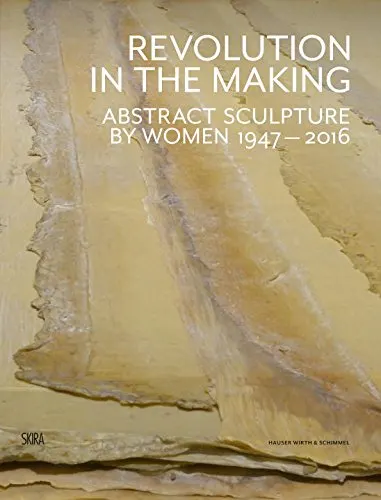
Revolution in the Making
Half theWorld traces the ways in which women artists deftly transformed the language of sculpture to invent radically new forms and processes that privileged studio practice, tactility and the artist’s hand.
La cel mai bun preț din ultima lună (226,00 lei)Unde cât costă
| Magazin | Preț | Istoric | |
|---|---|---|---|
CĂ Cărturești |
226,00 lei | la minimul propriu | Vezi în magazin |
Prețurile vin automat din listele magazinelor și se mai schimbă între timp. Cel care contează e cel din coșul magazinului, la plată. Linkurile către magazine sunt de parteneriat: dacă cumperi, luăm un comision de la magazin. Pe tine nu te costă nimic în plus, iar ordinea de mai sus e strict după preț.
Cum s-a mișcat prețul
Ce am observat noi
la minimToate cifrele de mai sus ies din ce am notat noi, în fiecare noapte. Nu le-am luat de nicăieri.
În fiecare zi luăm cel mai mic preț dintre toate magazinele și îl punem pe grafic. Linia verde e cel mai jos a coborât în ultima lună.
Lasă-ne adresa și îți scriem dacă scade sub 226,00 lei. Un singur e-mail, când chiar se întâmplă ceva. Îți cerem întâi o confirmare, și te poți retrage oricând dintr-un click.
Întrebări frecvente
Cât costă Revolution in the Making?
Cel mai ieftin îl găsești la Cărturești, cu 226,00 lei. Verificăm cifra în fiecare zi, direct din lista de prețuri a magazinului.
Este reducerea la Revolution in the Making una reală?
Nu chiar. Costă 226,00 lei, adică exact cât l-am văzut cel mai ieftin în ultima lună. Nu e o scădere nouă — dar nici nu plătești mai mult decât cei care au prins momentul bun.
Care a fost cel mai mic preț la Revolution in the Making?
Cel mai ieftin l-am prins la 226,00 lei — adică exact cât costă azi. Îl urmărim de 17 zile.
Ce zice magazinul despre el
Half theWorld traces the ways in which women artists deftly transformed the language of sculpture to invent radically new forms and processes that privileged studio practice, tactility and the artist’s hand. The volume seeks to identify the multiple strains of proto-feminist practices, characterized by abstraction and repetition, which rejected the singularity of the masterwork and rearranged sculptural form to be contingent upon the way the body moved around it in space. The catalogue begins in the immediate post-war era, with the first section spanning the late 1950s through the 1950s. Featuring historically important predecessors including Ruth Asawa, Lee Bontecou, Louise Bourgeois, Claire Falkenstein and Louise Nevelson, this section examines abstraction based on the human figure and the influence of the unconscious. The second section covers the decades of the 1960s and 1970s, and includes Magdalena Abakanowicz, Lynda Benglis, Heidi Bucher, Gego, Francois Grossen, Eva Hesse, Sheila Hicks, Marisa Merz, Mira Schendel, Michelle Stuart, Hannah Wilke, and Jackie Winsor, a generation of post-minimalist artists who ignited a revolution in their use of process-oriented materials and methods. In the 1980s and 1990s, the period explored in the third section, artists Phyllida Barlow, Isa Genzken, Cristina Iglesias, Liz Larner, Anna Maria Maiolino, Senga Nengudi, and Ursula von Rydingsvard moved beyond singular, three-dimensional objects toward architectonic works characterized by repetition, structure, and design. The final section is comprised of post-2000 works by artists Karla Black, Abigail DeVille, Sonia Gomes, Rachel Khedoori, Lara Schnitger, Shinique Smith, and Jessica Stockholder, artists who create installation-based environments, embracing domestic materials and craft as an embedded discourse.
Descrierea e luată de la Cărturești.
Produse similare din Cărți în limbi străine
Vezi categoria →