French Themes
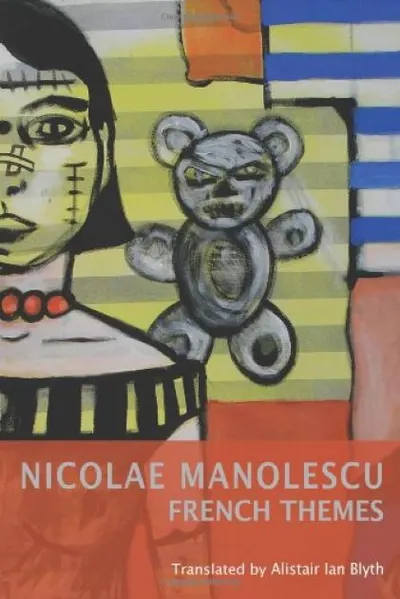
Teme franceze (French themes) was published by the Romanian Cultural Institute in 2006 to mark the international Francophonie Summit held that year in Bucharest.
La cel mai bun preț din ultima lună (32,00 lei)Unde cât costă
| Magazin | Preț | Istoric | |
|---|---|---|---|
CĂ Cărturești |
32,00 lei | la minimul propriu | Vezi în magazin |
Prețurile vin automat din listele magazinelor și se mai schimbă între timp. Cel care contează e cel din coșul magazinului, la plată. Linkurile către magazine sunt de parteneriat: dacă cumperi, luăm un comision de la magazin. Pe tine nu te costă nimic în plus, iar ordinea de mai sus e strict după preț.
Cum s-a mișcat prețul
Ce am observat noi
la minimToate cifrele de mai sus ies din ce am notat noi, în fiecare noapte. Nu le-am luat de nicăieri.
În fiecare zi luăm cel mai mic preț dintre toate magazinele și îl punem pe grafic. Linia verde e cel mai jos a coborât în ultima lună.
Lasă-ne adresa și îți scriem dacă scade sub 32,00 lei. Un singur e-mail, când chiar se întâmplă ceva. Îți cerem întâi o confirmare, și te poți retrage oricând dintr-un click.
Întrebări frecvente
Cât costă French Themes?
Cel mai ieftin îl găsești la Cărturești, cu 32,00 lei. Verificăm cifra în fiecare zi, direct din lista de prețuri a magazinului.
Este reducerea la French Themes una reală?
Nu chiar. Costă 32,00 lei, adică exact cât l-am văzut cel mai ieftin în ultima lună. Nu e o scădere nouă — dar nici nu plătești mai mult decât cei care au prins momentul bun.
Care a fost cel mai mic preț la French Themes?
Cel mai ieftin l-am prins la 32,00 lei — adică exact cât costă azi. Îl urmărim de 13 zile.
Ce zice magazinul despre el
Teme franceze (French themes) was published by the Romanian Cultural Institute in 2006 to mark the international Francophonie Summit held that year in Bucharest. This collection of Nicolae Manolescu's articles and reviews on the subject of French writers and literature originally appeared in Romanian literary magazines in the 1970s and 80s, the last two decades of the communist regime. Between 1971 and 1988, the articles also appeared in a seven-volume series Teme (Themes). The majority of Manolescu's 'themes' have both classic and contemporary Romanian literature as their subject, making them an integral part of the vast output of perhaps one of the most important Romanian literary critics of the last four decades. Throughout French Themes, Manolescu draws comparisons between French and Romanian writers, for example between Marcel Proust and inter-war Romanian psychological novelist Hortensia Papadat-Bengescu, who, in a rather disconcerting contrast to Proust's 'l'eternel imparfait,' manages the extraordinary feat of constructing a narrative using almost entirely the pluperfect tense in her novel The Hidden Road (1933). But ultimately, in spite of major Romanian writers like Ionesco, Cioran and Mircea Eliade, it is French literature that has overwhelmingly influenced Romanian literature. One of the main reasons for this was that, in the nineteenth century the emergent Romanian nation state looked to France as its Latin 'older sister' in everything from architecture, painting and literature to manners and fashion. In his study of the diffusion of French and British novels in nineteenth-century Europe, Franco Moretti finds that Romania was one of the largest 'narrative markets' for writers such as Victor Hugo, Dumas, Stendhal and Balzac, whereas the main British exports, Dickens and Walter Scott, were barely translated into Romanian at all. Although the book covers French literature from the Tristan et Iseult to A la recherche du temps perdu and contemporary works, it is the French nineteenth-century novel that makes up the greater part of the subject matter of French Themes.
Descrierea e luată de la Cărturești.
Alte cărți de Nicolae Manolescu

Produse similare din Cărți în limbi străine
Vezi categoria →