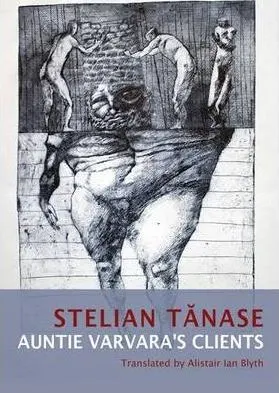
Auntie Varvara's Clients
Stelian Tanase's book explores the politics of the totalitarian state.
La cel mai bun preț din ultima lună (32,00 lei)Unde cât costă
| Magazin | Preț | Istoric | |
|---|---|---|---|
CĂ Cărturești |
32,00 lei | la minimul propriu | Vezi în magazin |
Prețurile vin automat din listele magazinelor și se mai schimbă între timp. Cel care contează e cel din coșul magazinului, la plată. Linkurile către magazine sunt de parteneriat: dacă cumperi, luăm un comision de la magazin. Pe tine nu te costă nimic în plus, iar ordinea de mai sus e strict după preț.
Cum s-a mișcat prețul
Ce am observat noi
la minimToate cifrele de mai sus ies din ce am notat noi, în fiecare noapte. Nu le-am luat de nicăieri.
În fiecare zi luăm cel mai mic preț dintre toate magazinele și îl punem pe grafic. Linia verde e cel mai jos a coborât în ultima lună.
Lasă-ne adresa și îți scriem dacă scade sub 32,00 lei. Un singur e-mail, când chiar se întâmplă ceva. Îți cerem întâi o confirmare, și te poți retrage oricând dintr-un click.
Întrebări frecvente
Cât costă Auntie Varvara's Clients?
Cel mai ieftin îl găsești la Cărturești, cu 32,00 lei. Verificăm cifra în fiecare zi, direct din lista de prețuri a magazinului.
Este reducerea la Auntie Varvara's Clients una reală?
Nu chiar. Costă 32,00 lei, adică exact cât l-am văzut cel mai ieftin în ultima lună. Nu e o scădere nouă — dar nici nu plătești mai mult decât cei care au prins momentul bun.
Care a fost cel mai mic preț la Auntie Varvara's Clients?
Cel mai ieftin l-am prins la 32,00 lei — adică exact cât costă azi. Îl urmărim de 15 zile.
Ce zice magazinul despre el
Stelian Tanase's book explores the politics of the totalitarian state. He is an historical authority on the communist period in Romania. Auntie Varvara's Clients brings to life documents discovered in the archives of the pre-communist secret police, the Siguranta (nicknamed Auntie Varvara). This extensive work reveals a regime reliant on secrecy. The narrative changes tense unannounced, giving a surreal, filmic quality to the writing. Tanase takes us from the early days of illegal membership of the communist underground, at the end of the First World War, to the eventual rise to power and the struggle for supremacy. Auntie Varvara's Clients is illustrated with the art of contemporary Romanian artist Cristian Tarba, as well as original Siguran mugshots and photographic portraits of members of the underground including Gheorghe Gheorghiu-Dej, Ana Pauker and Nicolae Ceausescu. One of the main theses of Auntie Varvara s Clients is that the organisational structure of the underground a closed, rigidly hierarchical secret society, comprising cells, of whose members was demanded blind obedience and unthinking submission to the arbitrary will of the absolute leader, and in which dissent or apostasy was punishable by death was extended to the whole of Romanian society once the communists seized power. Romania becomes a vast prison camp, what Tanase calls a carceral society. The inmates of this prison are housed in barrack-like conditions (communal flats and shoddily built prefabricated concrete blocks). They are subjected to strict rationing (food queues, shortages, central economic planning as a means of mass repression through enforced poverty; citizens are too exhausted by the time-consuming effort to obtain enough to eat for them to put up any resistance against the regime).4 The barbed wire fence of the prison camp runs for the entire length of the national borders (travel abroad is restricted to all but a privileged few, and those attempting to escape are summarily shot). The camp guards administer hard labour (the vast Danube-Black Sea Canal construction site became a mass grave for the inter-war elites and for those peasants who opposed collectivisation) and fatigues (for example, in Romania, students and even school children were forced during their holidays to carry out unpaid agricultural labour and work in factories so-called patriotic labour ). As in any prison, individual privacy is abolished: surveillance is omnipresent; the prison warders the authorities spy on the inmates and encourage them to spy on each other. This vision of society as a vast prison, a carceral society, is also known as kazarmnyy komunizm (barracks communism) or Nechaevshchina (Nechayevism). Sergey Gennadiyevich Nechayev (1847-1882) was the Russian revolutionary who inspired the character of amoral fanatic Pyotr Stepanovich Verkhovensky in Dostoevsky s Besy (1871-72) (variously translated as Demons, The Devils, The Possessed). Nechayev's Katekhizis Revolyutsionera (The Catechism of the Revolutionary) (1869), the source of the famous revolutionary slogan the ends justify the means, subsequently became precisely that: the articles of faith shared by all those engaged in the clandestine struggle to destroy society. As the clandestine histories of each of Auntie Varvara's individual clients...
Descrierea e luată de la Cărturești.
Alte cărți de Stelian Tanase

Produse similare din Cărți în limbi străine
Vezi categoria →