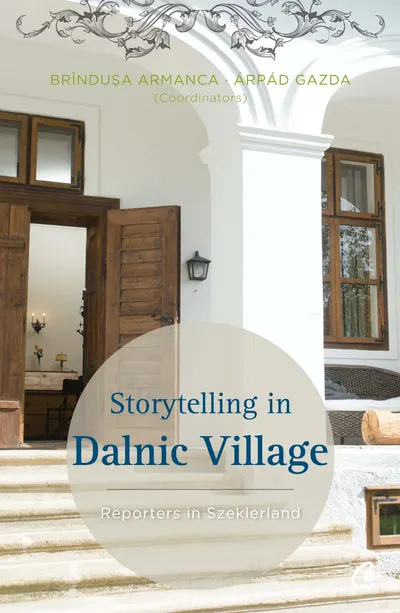
Storytelling in Dalnic Village
The Romanian version of this book was published as Dalnic.
La cel mai bun preț din ultima lună (49,00 lei)Unde cât costă
| Magazin | Preț | Istoric | |
|---|---|---|---|
CĂ Cărturești |
49,00 lei | la minimul propriu | Vezi în magazin |
Prețurile vin automat din listele magazinelor și se mai schimbă între timp. Cel care contează e cel din coșul magazinului, la plată. Linkurile către magazine sunt de parteneriat: dacă cumperi, luăm un comision de la magazin. Pe tine nu te costă nimic în plus, iar ordinea de mai sus e strict după preț.
Cum s-a mișcat prețul
Ce am observat noi
la minimToate cifrele de mai sus ies din ce am notat noi, în fiecare noapte. Nu le-am luat de nicăieri.
În fiecare zi luăm cel mai mic preț dintre toate magazinele și îl punem pe grafic. Linia verde e cel mai jos a coborât în ultima lună.
Lasă-ne adresa și îți scriem dacă scade sub 49,00 lei. Un singur e-mail, când chiar se întâmplă ceva. Îți cerem întâi o confirmare, și te poți retrage oricând dintr-un click.
Întrebări frecvente
Cât costă Storytelling in Dalnic Village?
Cel mai ieftin îl găsești la Cărturești, cu 49,00 lei. Verificăm cifra în fiecare zi, direct din lista de prețuri a magazinului.
Este reducerea la Storytelling in Dalnic Village una reală?
Nu chiar. Costă 49,00 lei, adică exact cât l-am văzut cel mai ieftin în ultima lună. Nu e o scădere nouă — dar nici nu plătești mai mult decât cei care au prins momentul bun.
Care a fost cel mai mic preț la Storytelling in Dalnic Village?
Cel mai ieftin l-am prins la 49,00 lei — adică exact cât costă azi. Îl urmărim de 21 zile.
Ce zice magazinul despre el
The Romanian version of this book was published as Dalnic. Istorii nespuse din satul lui Doja. Reporteri in Secuime.
The Hungarian version of this book was published as Dalnok felfedezese. Roman es magyar ujsagirok Dozsa falujarol.
We ransacked the place for clues; we knocked on gates to see ruined mansions and marvelous parks towered by centuries old Gingko biloba trees; we haunted the graveyard uphill; we partook in the Reformed Church Service and also of woodpecker’s diligence, as it was pecking nude the steeple eaves; we ate potato bread, red onions and smoked lard, also savoring sweet nutty vanilla kurtos which beat all else their kind, by any standards; we took snap shots and videos of the Doja massive statues; we visited the local museums and the fabled mofettes; we enjoyed meeting carnival Hussars and peasants displaying baskets full of potatoes, onions and pumpkins, on local Thanksgiving Day fair [...]. The nights spent in Gal Mansion are as true as life, nothing left to invention: we did sit under the four-trunk walnut tree, sprawled on the sofas in the aristocratic halls, and dreamt in front of the fireplace, thereby fanning the fertile dialogues of this book born out of journalistic prying and childish joy at stories alive.
We actually urge you to go see for yourselves!
Brindusa ArmancaBRINDUSA ARMANCA is a journalist and a university professor of journalism. She has worked in highly acclaimed teams at Radio Free Europe, ‘22’ magazine, Expres, Timisoara and Ziua, where she held the position of editorial coordinating manager, as well as TVR Timisoara, where she was head of the regional branch for six years. She received several national and international awards for her TV films. In addition to publishing hundreds of newspaper articles and producing numerous radio and TV broadcasts, she also published eight books: Televiziunea regionala in Romania (Regional TV in Romania), Ghid de comunicare pentru jurnalisti si purtatori de cuvant (A Communication Guide for Journalists and Spokespersons), Mesajul lui Crypto (Crypto’s Message), Invata sa invingi (Learn to Win), Media Culpa, Istoria recenta in mass-media (Recent History in Mass-media), Frontieristii (Border-Crachers), Abolirea timpului buimac (Overturning the Cluttered Time). She was the head of the Romanian Cultural Institute (ICR) in Budapest for six years and president of EUNIC-Hungary. In 2005 she received the Romanian Academy Cultural Award and in 2012 the Hungarian Ministry of Culture honored her with the Cultural Award for cultural diplomacy. She is also a member of the Romanian Writers’ Association and member of the Romanian board of the Association of European Journalists — AZIR / AEJ.ISTVAN BIRO is a photographer based in Cluj-Napoca (Romania), specialized in editorial and stage photography, his most recent field of interest being portraits. He is available for commissions in any of the abovementioned fields and also in commercial photography. While studying at the University of Art and Design Cluj-Napoca, he has started out in 2000 as editorial photographer at the newspaper Kronika, where he still works as picture editor. He regularly does assignments for the MTI (Hungarian News Agency),...
Descrierea e luată de la Cărturești.
Produse similare din Cărți în limbi străine
Vezi categoria →