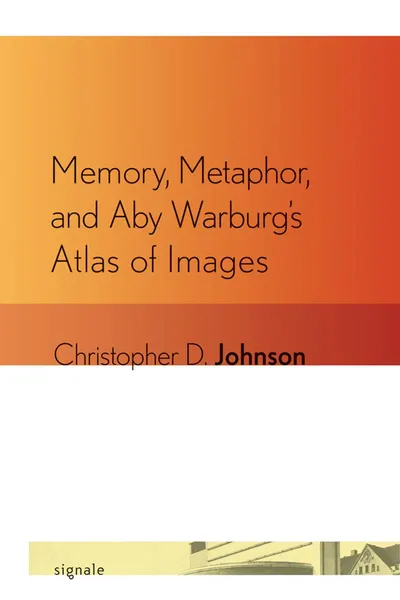
Memory, Metaphor, and Aby Warburg's Atlas of Images
The work of German cultural theorist and art historian Aby Warburg (1866–1929) has had a lasting effect on how we think about images.
La cel mai bun preț din ultima lună (189,00 lei)Unde cât costă
| Magazin | Preț | Istoric | |
|---|---|---|---|
CĂ Cărturești |
189,00 lei | la minimul propriu | Vezi în magazin |
Prețurile vin automat din listele magazinelor și se mai schimbă între timp. Cel care contează e cel din coșul magazinului, la plată. Linkurile către magazine sunt de parteneriat: dacă cumperi, luăm un comision de la magazin. Pe tine nu te costă nimic în plus, iar ordinea de mai sus e strict după preț.
Cum s-a mișcat prețul
Ce am observat noi
la minimToate cifrele de mai sus ies din ce am notat noi, în fiecare noapte. Nu le-am luat de nicăieri.
În fiecare zi luăm cel mai mic preț dintre toate magazinele și îl punem pe grafic. Linia verde e cel mai jos a coborât în ultima lună.
Lasă-ne adresa și îți scriem dacă scade sub 189,00 lei. Un singur e-mail, când chiar se întâmplă ceva. Îți cerem întâi o confirmare, și te poți retrage oricând dintr-un click.
Întrebări frecvente
Cât costă Memory, Metaphor, and Aby Warburg's Atlas of Images?
Cel mai ieftin îl găsești la Cărturești, cu 189,00 lei. Verificăm cifra în fiecare zi, direct din lista de prețuri a magazinului.
Este reducerea la Memory, Metaphor, and Aby Warburg's Atlas of Images una reală?
Nu chiar. Costă 189,00 lei, adică exact cât l-am văzut cel mai ieftin în ultima lună. Nu e o scădere nouă — dar nici nu plătești mai mult decât cei care au prins momentul bun.
Care a fost cel mai mic preț la Memory, Metaphor, and Aby Warburg's Atlas of Images?
Cel mai ieftin l-am prins la 189,00 lei — adică exact cât costă azi. Îl urmărim de 20 zile.
Ce zice magazinul despre el
The work of German cultural theorist and art historian Aby Warburg (1866–1929) has had a lasting effect on how we think about images. This book is the first in English to focus on his last project, the encyclopedic Atlas of Images: Mnemosyne. Begun in earnest in 1927, and left unfinished at the time of Warburg's death in 1929, the Mnemosyne-Atlas consisted of sixty-three large wooden panels covered with black cloth. On these panels Warburg carefully, intuitively arranged some thousand black-and-white photographs of classical and Renaissance art objects, as well as of astrological and astronomical images ranging from ancient Babylon to Weimar Germany. Here and there, he also included maps, manuscript pages, and contemporary images taken from newspapers. Trying through these constellations of images to make visible the many polarities that fueled antiquity's afterlife, Warburg envisioned the Mnemosyne-Atlas as a vital form of metaphoric thought.
While the nondiscursive, frequently digressive character of the Mnemosyne-Atlas complicates any linear narrative of its themes and contents, Christopher D. Johnson traces several thematic sequences in the panels. By drawing on Warburg's published and unpublished writings and by attending to Warburg's cardinal idea that "pathos formulas" structure the West's cultural memory, Johnson maps numerous tensions between word and image in the Mnemosyne-Atlas. In addition to examining the work itself, he considers the literary, philosophical, and intellectual-historical implications of the Mnemosyne-Atlas. As Johnson demonstrates, the Mnemosyne-Atlas is not simply the culmination of Warburg’s lifelong study of Renaissance culture but the ultimate expression of his now literal, now metaphoric search for syncretic solutions to the urgent problems posed by the history of art and culture.
Descrierea e luată de la Cărturești.
Produse similare din Cărți în limbi străine
Vezi categoria →