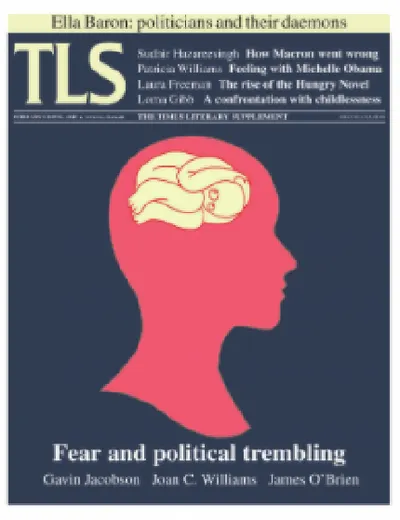
Times Literary Supplement no. 6045 / February 2019
“Project Fear” once had a successful electoral pedigree.
La cel mai bun preț din ultima lună (22,00 lei)Unde cât costă
| Magazin | Preț | Istoric | |
|---|---|---|---|
CĂ Cărturești |
22,00 lei | la minimul propriu | Vezi în magazin |
Prețurile vin automat din listele magazinelor și se mai schimbă între timp. Cel care contează e cel din coșul magazinului, la plată. Linkurile către magazine sunt de parteneriat: dacă cumperi, luăm un comision de la magazin. Pe tine nu te costă nimic în plus, iar ordinea de mai sus e strict după preț.
Cum s-a mișcat prețul
Ce am observat noi
la minimToate cifrele de mai sus ies din ce am notat noi, în fiecare noapte. Nu le-am luat de nicăieri.
În fiecare zi luăm cel mai mic preț dintre toate magazinele și îl punem pe grafic. Linia verde e cel mai jos a coborât în ultima lună.
Lasă-ne adresa și îți scriem dacă scade sub 22,00 lei. Un singur e-mail, când chiar se întâmplă ceva. Îți cerem întâi o confirmare, și te poți retrage oricând dintr-un click.
Întrebări frecvente
Cât costă Times Literary Supplement no. 6045 / February 2019?
Cel mai ieftin îl găsești la Cărturești, cu 22,00 lei. Verificăm cifra în fiecare zi, direct din lista de prețuri a magazinului.
Este reducerea la Times Literary Supplement no. 6045 / February 2019 una reală?
Nu chiar. Costă 22,00 lei, adică exact cât l-am văzut cel mai ieftin în ultima lună. Nu e o scădere nouă — dar nici nu plătești mai mult decât cei care au prins momentul bun.
Care a fost cel mai mic preț la Times Literary Supplement no. 6045 / February 2019?
Cel mai ieftin l-am prins la 22,00 lei — adică exact cât costă azi. Îl urmărim de 18 zile.
Ce zice magazinul despre el
“Project Fear” once had a successful electoral pedigree. In 2014, it powered the panic-ridden campaign to keep Scotland in the United Kingdom: the case for independence was emotive, aspirational and unlikely; the case for the maintenance of the United Kingdom was based on (legitimate) warnings about fiscal disaster if the alternative prevailed. In 2015, the Conservatives were elected largely because they warned that the opposition was simply more frightening. On election day, David Cameron famously tweeted “Britain faces a simple and inescapable choice – stability and strong Government with me, or chaos with Ed Miliband”. It has been retweeted more than 20,000 times, mostly with irony in the subsequent, Brexit-dominated years.
In the 2016 EU referendum, Project Fear famously failed. Brexit voters felt that the economic doom-mongering was either inaccurate or irrelevant: the prize of sovereignty, the lure of a nostalgic return to insular identity, was worth any imputed cost. But, as Gavin Jacobson notes this week, anxiety remains the dominant political and social force of our times. It manifests itself in envy of others who appear to have things easier, in discomfort at change and shifting boundaries. It makes people liable to the words of demagogues, creating a “growing dependence on national seducers who promise to make us safe”. But liberals wish to seduce with terror, too: the question will become whether anyone wishes to listen to them.
Joan C. Williams also writes about the drama of divisiveness, the battle between “metro” and “retro”, between “economically thriving, multicultural cities like London and San Francisco and the still overwhelmingly white rural areas left behind”. One response might be empathy: “metros need to forge a society that includes the retros as human beings with different tastes, notably for stability rather than novelty”.
Descrierea e luată de la Cărturești.
Produse similare din Cărți în limbi străine
Vezi categoria →