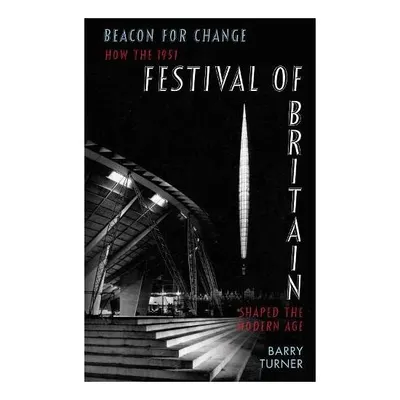
Beacon of Change
As the 2012 Olympics sets about re-making a whole swathe of east London, Barry Turner’s book marks the 60th anniversary of the Festival of Britain, which did the same for London’s South Bank after the war.
Încă îl urmărimCum s-a mișcat prețul
Ce am observat noi
la minimToate cifrele de mai sus ies din ce am notat noi, în fiecare noapte. Nu le-am luat de nicăieri.
În fiecare zi luăm cel mai mic preț dintre toate magazinele și îl punem pe grafic. Linia verde e cel mai jos a coborât în ultima lună.
Lasă-ne adresa și îți scriem dacă scade sub —. Un singur e-mail, când chiar se întâmplă ceva. Îți cerem întâi o confirmare, și te poți retrage oricând dintr-un click.
Ce zice magazinul despre el
As the 2012 Olympics sets about re-making a whole swathe of east London, Barry Turner’s book marks the 60th anniversary of the Festival of Britain, which did the same for London’s South Bank after the war. Where the stupendous, Pharaonic construction site of the 2012 Olympics and its £9 bn budget is all in aid of a few weeks of running and cycle races, 60 years ago there was a far more ambitious cultural event. Centred on London’s South Bank, which was cleared of its industry and Victorian architecture, the Festival of Britain sought not only to celebrate the best of Britishness but also to set new standards and paradigms for modern design, aesthetics and architecture. With satellite festivals all over Britain, it attracted 8 ½ million visitors in a year (the Millennium Dome managed only 5 ½ million). The Royal Festival Hall was built, as well as the Dome of Discovery (then the largest unsupported roof in the world), and the long-lamented, Skylon (a futuristic aluminium pylon). The Scandinavian design we now
Descrierea e luată de la Anticexlibris.
Produse similare din Istorie & societate
Vezi categoria →