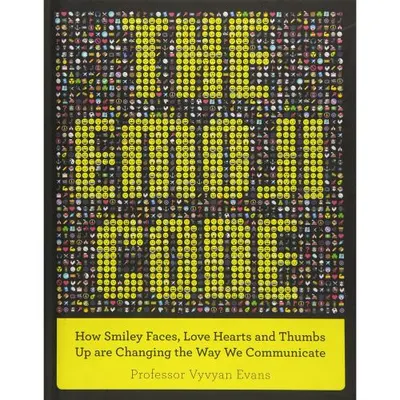
The Emoji Code: How Smiley Faces, Love Hearts and Thumbs Up are Changing the Way We Communicate
Since 2011, the use of emoji - deriving from the Japanese, meaning picture character - has become a global phenomenon.
Încă îl urmărimCum s-a mișcat prețul
Ce am observat noi
la minimToate cifrele de mai sus ies din ce am notat noi, în fiecare noapte. Nu le-am luat de nicăieri.
În fiecare zi luăm cel mai mic preț dintre toate magazinele și îl punem pe grafic. Linia verde e cel mai jos a coborât în ultima lună.
Lasă-ne adresa și îți scriem dacă scade sub —. Un singur e-mail, când chiar se întâmplă ceva. Îți cerem întâi o confirmare, și te poți retrage oricând dintr-un click.
Ce zice magazinul despre el
Since 2011, the use of emoji - deriving from the Japanese, meaning picture character - has become a global phenomenon. We send over 6 billion emoji every day and regularly send emoji-only messages, and, when Oxford Dictionaries named the 'Face with Tears of Joy' emoji as their 'Word of the Year 2015', it received an enormous amount of criticism.
Whenever emoji are covered in the popular media the same burning questions come up: Can an emoji really be a word? How language-like is it? Will emoji make us dumber? Or more lazy? Will they make us less adept at communicating with our nearest and dearest? And does this signal the death knell for language as we know it?
Drawing on findings from disciplines as diverse as linguistics, cognitive science, psychology, neuroscience, archaeology and anthropology, this groundbreaking book explores human capacity to communicate, and addresses these questions in the process.
The Emoji Code sheds light on emoji's vital role in the expression of emotion in digital commun
Descrierea e luată de la Anticexlibris.
Produse similare din Psihologie & filosofie
Vezi categoria →