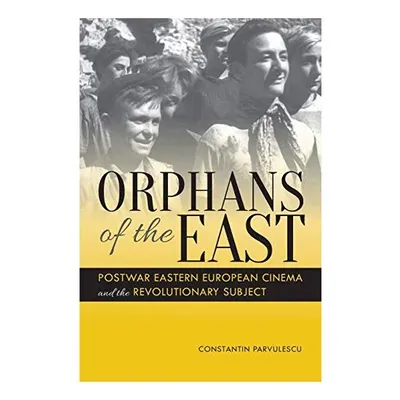
Orphans of the East
Unlike the benevolent orphan found in Charlie Chaplin's The Kid or the sentimentalized figure of Little Orphan Annie, the orphan in postwar Eastern European cinema takes on a much more politically fraught role,
Încă îl urmărimCum s-a mișcat prețul
Ce am observat noi
la minimToate cifrele de mai sus ies din ce am notat noi, în fiecare noapte. Nu le-am luat de nicăieri.
În fiecare zi luăm cel mai mic preț dintre toate magazinele și îl punem pe grafic. Linia verde e cel mai jos a coborât în ultima lună.
Lasă-ne adresa și îți scriem dacă scade sub —. Un singur e-mail, când chiar se întâmplă ceva. Îți cerem întâi o confirmare, și te poți retrage oricând dintr-un click.
Ce zice magazinul despre el
Unlike the benevolent orphan found in Charlie Chaplin's The Kid or the sentimentalized figure of Little Orphan Annie, the orphan in postwar Eastern European cinema takes on a much more politically fraught role, embodying the tensions of individuals struggling to recover from war and grappling with an unknown future under Soviet rule. By exploring films produced in postwar Hungary, the German Democratic Republic, Czechoslovakia, Romania, and Poland, Parvulescu traces the way in which cinema envisioned and debated the condition of the post-World War II subject and the "new man" of Soviet-style communism. In these films, the orphan becomes a cinematic trope by which to interrogate socialist visions of ideological institutionalization and re-education and to stand as a silent critic of the system's shortcomings or as a resilient spirit who has resisted capture by the political apparatus of the new state.
Descrierea e luată de la Anticexlibris.
Produse similare din Istorie & societate
Vezi categoria →