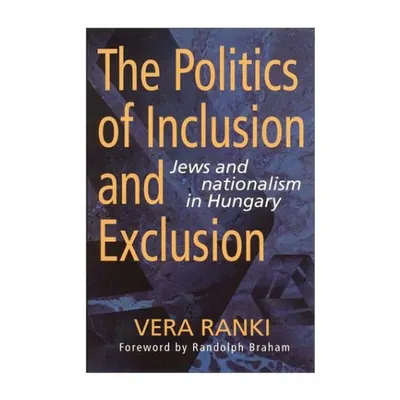
The Politics of Inclusion and Exclusion
The case of Hungarian Jews in the 19th-20th centuries, first included in the Hungarian nation and then, after 1919, excluded from it, is a poignant illustration of the changing politics of nationalism and the…
Încă îl urmărimCum s-a mișcat prețul
Ce am observat noi
la minimToate cifrele de mai sus ies din ce am notat noi, în fiecare noapte. Nu le-am luat de nicăieri.
În fiecare zi luăm cel mai mic preț dintre toate magazinele și îl punem pe grafic. Linia verde e cel mai jos a coborât în ultima lună.
Lasă-ne adresa și îți scriem dacă scade sub —. Un singur e-mail, când chiar se întâmplă ceva. Îți cerem întâi o confirmare, și te poți retrage oricând dintr-un click.
Ce zice magazinul despre el
The case of Hungarian Jews in the 19th-20th centuries, first included in the Hungarian nation and then, after 1919, excluded from it, is a poignant illustration of the changing politics of nationalism and the process of exclusion to the point of genocide. Hungarian nationalism, which emerged in the 19th century, construed the nation as a cultural entity and tended to include Hungarian-speaking, assimilated Jews in the dominant Magyar minority of the Kingdom. The treaty of Trianon changed the formula of Hungarian nationalism and made the Jews not only outsiders, but also a social hindrance. Antisemitism, which was a rather marginal phenomenon in the 19th century, became a cornerstone of the official ideology under Horthy. Horthy's Hungary cooperated willingly with the Nazis in the "solution of the Jewish question". The anti-Jewish laws of 1938-41 were enacted without Nazi pressure and were supported by popular opinion. The regime was also instrumental in the deportation of Jews in 1944. Thus, the Holocaust in Hungary was a direct outcome of the country's interwar nationalism. Tragically, the Jews of Hungary relied on the "assimilationist social contract" up to the end of the war; they believed in dialogue with the authorities, and did not protest.
Descrierea e luată de la Anticexlibris.
Produse similare din Istorie & societate
Vezi categoria →