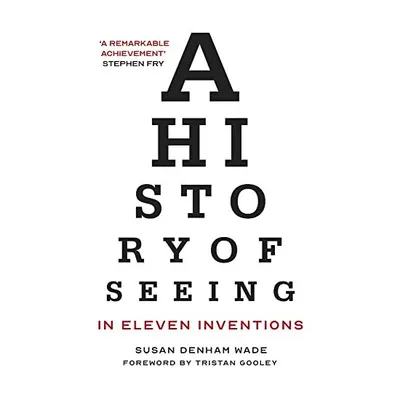
A History of Seeing in Eleven Inventions
Eyes were one of the very first body parts to evolve more than 500 million years ago, and their structure has remained virtually unchanged through most of evolutionary history.
Încă îl urmărimCum s-a mișcat prețul
Ce am observat noi
la minimToate cifrele de mai sus ies din ce am notat noi, în fiecare noapte. Nu le-am luat de nicăieri.
În fiecare zi luăm cel mai mic preț dintre toate magazinele și îl punem pe grafic. Linia verde e cel mai jos a coborât în ultima lună.
Lasă-ne adresa și îți scriem dacă scade sub —. Un singur e-mail, când chiar se întâmplă ceva. Îți cerem întâi o confirmare, și te poți retrage oricând dintr-un click.
Ce zice magazinul despre el
Eyes were one of the very first body parts to evolve more than 500 million years ago, and their structure has remained virtually unchanged through most of evolutionary history. But eyes alone were never enough for Homo sapiens. From the mastery of fire a million years ago to the smartphone today, humans have repeatedly invented new ways to see their surroundings, each other and themselves. Artificial light, art, mirrors, writing, lenses, printing, photography, film, television, smartphones - these tools didn't just add to our visual repertoire, they shaped cultures around the world and made us who we are. Drawing on sources from anthropology to zoology, neuroscience to Netflix, As Far As the Eye Can See traces the history of seeing from the first evolutionary stirrings of sight and discovers that each time we changed how or what we see, we changed ourselves and the world around us. Along the way, it finds, sight slowly eclipsed our other senses. Are we now at 'peak seeing', the author asks. Can our eyes keep
Descrierea e luată de la Anticexlibris.
Produse similare din Istorie & societate
Vezi categoria →