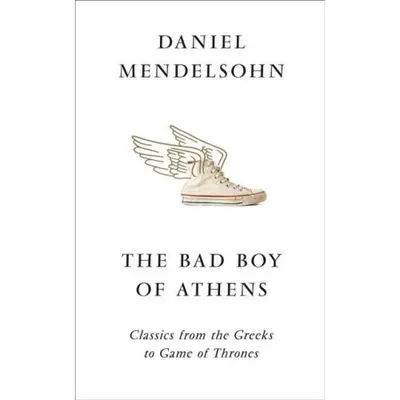
The Bad Boy of Athens
Over the past three decades, Daniel Mendelsohn's essays and reviews have earned him a reputation as 'our most irresistible literary critic' (New York Times).
Încă îl urmărimCum s-a mișcat prețul
Ce am observat noi
la minimToate cifrele de mai sus ies din ce am notat noi, în fiecare noapte. Nu le-am luat de nicăieri.
În fiecare zi luăm cel mai mic preț dintre toate magazinele și îl punem pe grafic. Linia verde e cel mai jos a coborât în ultima lună.
Lasă-ne adresa și îți scriem dacă scade sub —. Un singur e-mail, când chiar se întâmplă ceva. Îți cerem întâi o confirmare, și te poți retrage oricând dintr-un click.
Ce zice magazinul despre el
Over the past three decades, Daniel Mendelsohn's essays and reviews have earned him a reputation as 'our most irresistible literary critic' (New York Times). This striking new collection exemplifies the way in which Mendelsohn - a classicist by training - uses the classics as a lens to think about urgent contemporary debates.
There is much to surprise here. Mendelsohn invokes the automatons featured in Homer's epics to help explain the AI films Ex Machina and Her, and perceives how Ted Hughes sought redemption by translating a play of Euripides (the 'bad boy of Athens') about a wayward husband whose wife returns from the dead. There are essays on Sappho's sexuality and the feminism of Game of Thrones; on how Virgil's Aeneid prefigures post-World War II history and why we are still obsessed with the Titanic; on Patrick Leigh Fermor's final journey, Karl Ove Knausgaard's autofiction and the plays of Tom Stoppard, Tennessee Williams, and Noel Coward. The collection ends with a poignant account of the author
Descrierea e luată de la Anticexlibris.
Produse similare din Ficțiune & literatură
Vezi categoria →