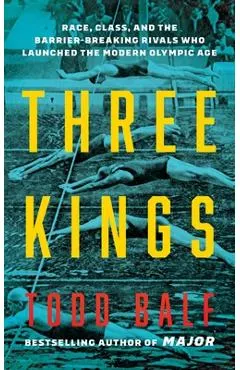
Three Kings: Race, Class, and the Barrier-Breaking Rivals Who Launched the Modern Olympic Age
For fans of The Boys in the Boat, and marking the 100th anniversary of the Paris Olympics, the never-before-told story of three athletes who defied the odds to usher in a golden age of sports Even today, it's c
Încă îl urmărimCum s-a mișcat prețul
Ce am observat noi
la minimToate cifrele de mai sus ies din ce am notat noi, în fiecare noapte. Nu le-am luat de nicăieri.
În fiecare zi luăm cel mai mic preț dintre toate magazinele și îl punem pe grafic. Linia verde e cel mai jos a coborât în ultima lună.
Lasă-ne adresa și îți scriem dacă scade sub —. Un singur e-mail, când chiar se întâmplă ceva. Îți cerem întâi o confirmare, și te poți retrage oricând dintr-un click.
Ce zice magazinul despre el
For fans of The Boys in the Boat, and marking the 100th anniversary of the Paris Olympics, the never-before-told story of three athletes who defied the odds to usher in a golden age of sports Even today, it's considered one of the most thrilling races in Olympic history. The hundred-meter sprint final at the 1924 Paris Games, featuring three of the world's fastest swimmers--American legends Duke Kahanamoku and Johnny Weissmuller, and Japanese upstart Katsuo Takaishi--had the cultural impact of other milestone moments in Olympic history: Jesse Owens' podiums in Berlin and John Carlos's raised, black-gloved fist in Mexico City. Never before had an Olympic swimming final prominently featured athletes of different races, and never had it been broadcast live. Across the globe, fans held their breath. In less than a minute, an Olympic record would be shattered, and the three men would be scrutinized like few athletes before them. For the millions worldwide for whom swimming was a complete unknown, the trio did something few could imagine: moving faster through water than many could on land. As sportsmen, they were godlike heroes, embodying the hopes of those who called them their own, in the US and abroad. They personified strength and speed, and the glamour and innovation of the Roaring Twenties. But they also represented fraught assumptions about race and human performance. It was not only East vs. West--as newspapers in the 1920s described the competition with Japan--it was also brown versus white. Rich versus poor. New versus old. The race was about far more than swimming. Each man was a trailblazer and a bona fide celebrity in an age when athletes typically weren't famous. Kahanamoku was Hawaii's first superstar, largely responsible for making the state the popular travel destination it is today. Weissmuller, a poor immigrant, put Chicago on the sports map and would make it big as Hollywood's first Tarzan. Takaishi inspired Japan to compete on the world stage and helped turn its swimmers into Olympic powerhouses. He and Kahanamoku in particular shattered the myth of white superiority when it came to sports, putting the lie to the decade's burgeoning eugenics movement. Three Kings traces the careers and rivalries of these men and the epochal times they lived in. The 1920s were transformative, not just socially but for sports as well. For the first time, athletes of color were given a fair (though still not equal) chance, and competition wasn't limited to t
Descrierea e luată de la Libris.
Produse similare din Alte cărți
Vezi categoria →