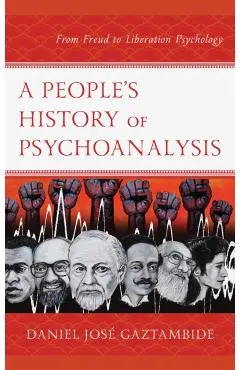
A People's History of Psychoanalysis: From Freud to Liberation Psychology
nAs inequality widens in all sectors of contemporary society, we must ask: is psychoanalysis too white and well-to-do to be relevant to social, economic, and racial justice struggles?
Încă îl urmărimCum s-a mișcat prețul
Ce am observat noi
la minimToate cifrele de mai sus ies din ce am notat noi, în fiecare noapte. Nu le-am luat de nicăieri.
În fiecare zi luăm cel mai mic preț dintre toate magazinele și îl punem pe grafic. Linia verde e cel mai jos a coborât în ultima lună.
Lasă-ne adresa și îți scriem dacă scade sub —. Un singur e-mail, când chiar se întâmplă ceva. Îți cerem întâi o confirmare, și te poți retrage oricând dintr-un click.
Ce zice magazinul despre el
nAs inequality widens in all sectors of contemporary society, we must ask: is psychoanalysis too white and well-to-do to be relevant to social, economic, and racial justice struggles? Are its ideas and practices too alien for people of color? Can it help us understand why systems of oppression are so stable and how oppression becomes internalized? In A People's History of Psychoanalysis: From Freud to Liberation Psychology, Daniel Jos Gaztambide reviews the oft-forgotten history of social justice in psychoanalysis. Starting with the work of Sigmund Freud and the first generation of left-leaning psychoanalysts, Gaztambide traces a series of interrelated psychoanalytic ideas and social justice movements that culminated in the work of Frantz Fanon, Paulo Freire, and Ignacio Mart n-Bar . Through this intellectual genealogy, Gaztambide presents a psychoanalytically informed theory of race, class, and internalized oppression that resulted from the intertwined efforts of psychoanalysts and racial justice advocates over the course of generations and gave rise to liberation psychology. This book is recommended for students and scholars engaged in political activism, critical pedagogy, and clinical work.
Descrierea e luată de la Libris.
Produse similare din Psihologie & filosofie
Vezi categoria →