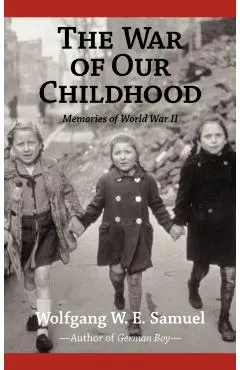
The War of Our Childhood: Memories of World War II
One survivor tells of the fire-bombing of Dresden.
Încă îl urmărimCum s-a mișcat prețul
Ce am observat noi
la minimToate cifrele de mai sus ies din ce am notat noi, în fiecare noapte. Nu le-am luat de nicăieri.
În fiecare zi luăm cel mai mic preț dintre toate magazinele și îl punem pe grafic. Linia verde e cel mai jos a coborât în ultima lună.
Lasă-ne adresa și îți scriem dacă scade sub —. Un singur e-mail, când chiar se întâmplă ceva. Îți cerem întâi o confirmare, și te poți retrage oricând dintr-un click.
Ce zice magazinul despre el
One survivor tells of the fire-bombing of Dresden. Another survivor recounts the pervasive fear of marauding Russian and Czech bandits raping and killing. Children recall fathers who were only photographs and mothers who were saviors and heroes. n These are typical in the stories collected in The War of Our Childhood: Memories of World War II. For this book Wolfgang W. E. Samuel, a childhood refugee himself after the fall of Nazi Germany, interviewed twenty-seven men and women who as children--by chance and sheer resilience--survived Allied bombs, invading armies, hunger, and chaos. n n Our eyes carried no hate, only recognition of what was, Samuel writes of his childhood. Peace was an abstraction. The world we Kinder knew nearly always had the word 'war' appended to it. n n Samuel's heartfelt narratives from these innocent survivors are invariably riveting and often terrifying. Each engrossing story has perilous and tragic moments--school children in Leuna who are sent home during an air raid but are strafed as moving targets; fathers who exist only as distant figures, returning to their families long after the war--or not at all; mothers who are raped and tortured; families who are forced into a seemingly endless relocation that replicates the terrors of war itself. In capturing such experiences from nearly every region of Germany and involving people of every socio-economic class, this is a collection of unique memories, but each account contributes to a cumulative understanding of the war that is more personal than strategic surveys and histories. n n For Samuel and the survivors he interviewed, agony and fright were part of everyday life, just as were play, wondrous experience, and above all perseverance. n n My focus, Samuel writes, is on the astounding ability of a generation of German children to emerge from debilitating circumstances as sane and productive human beings.n
Descrierea e luată de la Libris.
Produse similare din Istorie & societate
Vezi categoria →