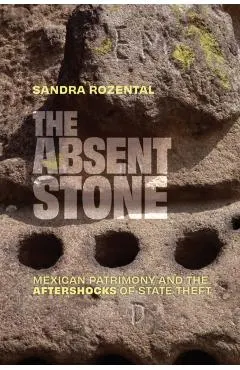
The Absent Stone: Mexican Patrimony and the Aftershocks of State Theft
Where and to whom do ancient things belong?
Încă îl urmărimCum s-a mișcat prețul
Ce am observat noi
la minimToate cifrele de mai sus ies din ce am notat noi, în fiecare noapte. Nu le-am luat de nicăieri.
În fiecare zi luăm cel mai mic preț dintre toate magazinele și îl punem pe grafic. Linia verde e cel mai jos a coborât în ultima lună.
Lasă-ne adresa și îți scriem dacă scade sub —. Un singur e-mail, când chiar se întâmplă ceva. Îți cerem întâi o confirmare, și te poți retrage oricând dintr-un click.
Ce zice magazinul despre el
Where and to whom do ancient things belong? What happens when they are stolen-not by a colonial power, but by a national museum claiming them as state patrimony? What kinds of healing and restitution can follow? In The Absent Stone, Sandra Rozental tells the story of the Piedra de los Tecomates, the largest stone monument in the Americas, popularly identified as the pre-Hispanic rain deity Tlaloc. In 1964, the Mexican state called in the military to forcefully relocate this 167-ton carving from the town of Coatlinchan to Mexico City's National Anthropology Museum. Using in-depth historical and ethnographic research, Rozental traces how the stone's absence continues to affect and unsettle Coatlinchan and its residents decades later, revealing the tensions between patrimony, nationalism, territory, memory, and materiality in Mexico. Questioning the premise that historical artifacts belong in museums under state-sanctioned care, The Absent Stone pushes contemporary critical scholarship on monuments and museum collections beyond the language of law, heritage, and cultural property, demonstrating how ancient things remain bound to the people and places they come from even after they are removed and displayed elsewhere.
Descrierea e luată de la Libris.
Produse similare din Istorie & societate
Vezi categoria →