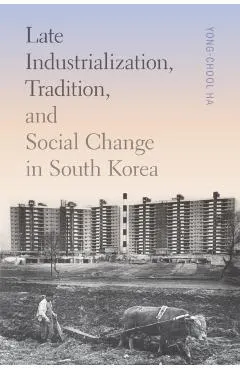
Late Industrialization, Tradition, and Social Change in South Korea
n Examines how primary social ties fueled economic growth n nSouth Korea's rapid industrialization occurred with the rise of powerful chaebǒl (family-owned business conglomerates) that controlled vast swaths…
Încă îl urmărimCum s-a mișcat prețul
Ce am observat noi
la minimToate cifrele de mai sus ies din ce am notat noi, în fiecare noapte. Nu le-am luat de nicăieri.
În fiecare zi luăm cel mai mic preț dintre toate magazinele și îl punem pe grafic. Linia verde e cel mai jos a coborât în ultima lună.
Lasă-ne adresa și îți scriem dacă scade sub —. Un singur e-mail, când chiar se întâmplă ceva. Îți cerem întâi o confirmare, și te poți retrage oricând dintr-un click.
Ce zice magazinul despre el
n Examines how primary social ties fueled economic growth n nSouth Korea's rapid industrialization occurred with the rise of powerful chaebǒl (family-owned business conglomerates) that controlled vast swaths of the nation's economy. Leader Park Chung Hee's sense of backwardness and urgency led him to rely on familial, school, and regional ties to expedite the economic transformation. Late Industrialization, Tradition, and Social Change in South Korea elucidates how a country can progress economically while relying on traditional social structures that usually fragment political and economic vitality. The book proposes a new framework for macro social change under late industrialization by analyzing the specific process of interactions between economic tasks and tradition through the state's mediation. n nDrawing on interviews with bureaucrats in the Ministry of Commerce and Industry as well as workers and others, Yong-Chool Ha demonstrates how the state propelled industrialization by using kinship networks to channel investments and capital into chaebǒl corporations. What Ha calls neofamilism was the central force behind South Korea's economic transformation as the state used preindustrial social patterns to facilitate industrialization. Ha's account of bureaucracy, democratization, and the middle class challenges assumptions about the universal outcomes of industrialization. n nLate Industrialization, Tradition, and Social Change in South Korea is also available in an open access edition, DOI 10.6069/9780295753249n
Descrierea e luată de la Libris.
Produse similare din Istorie & societate
Vezi categoria →