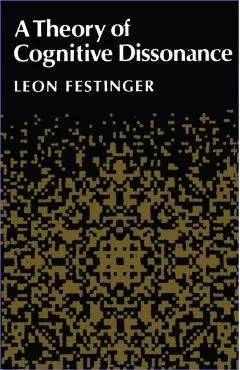
Theory of Cognitive Dissonance
Leon Festinger's theory of cognitive dissonance has been widely recognized for its important and influential concepts in areas of motivation and social psychology.
A fost și mai ieftin — l-am prins la 274,86 leiCum s-a mișcat prețul
Ce am observat noi
peste minimToate cifrele de mai sus ies din ce am notat noi, în fiecare noapte. Nu le-am luat de nicăieri.
În fiecare zi luăm cel mai mic preț dintre toate magazinele și îl punem pe grafic. Linia verde e cel mai jos a coborât în ultima lună.
Lasă-ne adresa și îți scriem dacă scade sub —. Un singur e-mail, când chiar se întâmplă ceva. Îți cerem întâi o confirmare, și te poți retrage oricând dintr-un click.
Ce zice magazinul despre el
Leon Festinger's theory of cognitive dissonance has been widely recognized for its important and influential concepts in areas of motivation and social psychology. The theory of dissonance is here applied to the problem of why partial reward, delay of reward, and effort expenditure during training result in increased resistance to extinction.
The author contends that a state of impasse exists within learning theory largely because some of its major assumptions stand in apparent opposition to cetain well-established experimental results. The book puts forward a new theory that seems to reconcile these data and assumptions. This new theory can account for data with which other theories have difficulty: it integrates empirical phenomena that have been regarded as unrelated, and it is supported by the results of experiments designed specifically to test its implications. These experiments are fully described in the text. n
Descrierea e luată de la Libris.
Produse similare din Psihologie & filosofie
Vezi categoria →