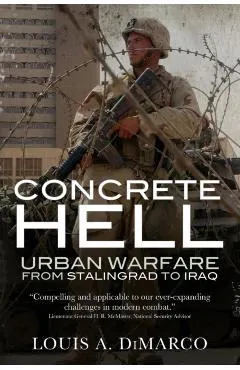
Concrete Hell: Urban warefare from Stalingrad to Iraq
n nThroughout history, cities have been at the center of warfare, from sieges to street-fighting, from peace-keeping to coups de mains.
Încă îl urmărimCum s-a mișcat prețul
Ce am observat noi
la minimToate cifrele de mai sus ies din ce am notat noi, în fiecare noapte. Nu le-am luat de nicăieri.
În fiecare zi luăm cel mai mic preț dintre toate magazinele și îl punem pe grafic. Linia verde e cel mai jos a coborât în ultima lună.
Lasă-ne adresa și îți scriem dacă scade sub —. Un singur e-mail, când chiar se întâmplă ceva. Îți cerem întâi o confirmare, și te poți retrage oricând dintr-un click.
Ce zice magazinul despre el
n nThroughout history, cities have been at the center of warfare, from sieges to street-fighting, from peace-keeping to coups de mains. Sun Tzu admonished his readers of The Art of War that the lowest realization of warfare was to attack a fortified city - a maxim that the Russian army should have heeded before it launched its operation to seize the Chechnyan city of Grozny. Indeed, although strategists have advised against it across the millennia, armies and generals have been forced nonetheless to attack and defend cities, and victory has required that they do it well. In Concrete Hell the author, Louis DiMarco, has provided a masterful study of the brutal realities of urban warfare, of what it means to seize and hold a city literally block by block. Such a study could not be more timely. We live in an increasingly urbanizing world, a military unprepared for urban operations is unprepared for tomorrow. Fighting in cities requires new skills, new weaponry and new tactics. But there is no better way to prepare than to look at the successes and failure of some of the most famous operations in modern military history including Stalingrad, Hue City and Fallujah.n
Descrierea e luată de la Libris.
Produse similare din Istorie & societate
Vezi categoria →