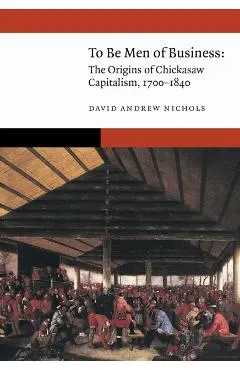
To Be Men of Business: The Origins of Chickasaw Capitalism, 1700-1840
nCapitalism during the American colonial era was an economic system known primarily for dispossessing and exploiting Indigenous peoples.
Încă îl urmărimCum s-a mișcat prețul
Ce am observat noi
la minimToate cifrele de mai sus ies din ce am notat noi, în fiecare noapte. Nu le-am luat de nicăieri.
În fiecare zi luăm cel mai mic preț dintre toate magazinele și îl punem pe grafic. Linia verde e cel mai jos a coborât în ultima lună.
Lasă-ne adresa și îți scriem dacă scade sub —. Un singur e-mail, când chiar se întâmplă ceva. Îți cerem întâi o confirmare, și te poți retrage oricând dintr-un click.
Ce zice magazinul despre el
nCapitalism during the American colonial era was an economic system known primarily for dispossessing and exploiting Indigenous peoples. Some Indigenous nations, however, learned to use its primary features--wealth accumulation, private investment, and a globalized marketplace--to strengthen their families and defend their communities. The Chickasaws of the American Southeast exemplified these Indigenous capitalists.n nTo Be Men of Business examines the Chickasaw Nation's education in business and commerce, adaptation to a capitalist economy, and survival by maneuvering in the market economy established by settlers in North America. The Chickasaw Nation, initially a subsistence-oriented society, first entered the Atlantic market economy in the late 1600s through the Native American slave trade, when Chickasaw men's participation in slave raiding brought significant material gains and introduced their families to European goods. Over the course of two hundred years, Chickasaw families adopted aspects of capitalist culture while retaining elements of their own foundational culture norms.n nThe Chickasaw Nation's economic history provides a case study of how a noncapitalist society integrated itself into an increasingly capitalist atmosphere. Amid this economic shift, Chickasaw leaders worked to protect their people from predatory white traders and officials by sending their children to mission schools for English literacy and resisting efforts by the U.S government to gain land cessions from the Chickasaw people. Business and commerce literacy also allowed the Chickasaw Nation some control over their forced migration, and the protective economic institutions Chickasaw leaders established became the basis for a revived Chickasaw national identity following removal from their homeland.n
Descrierea e luată de la Libris.
Produse similare din Istorie & societate
Vezi categoria →