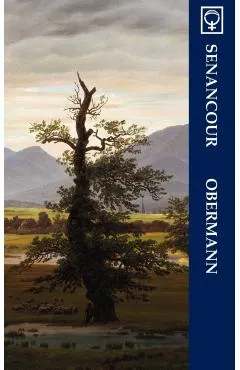
Obermann (Noumena Classics)
I have seen a valley suffused with mellow light beneath a lovely veil of morning mist .
A fost și mai ieftin — l-am prins la 119,04 leiUnde cât costă
| Magazin | Preț | Istoric | |
|---|---|---|---|
LB Libris ISBN 9780976706236 |
133,92 lei | minim aici: 119,04 lei | Vezi în magazin |
Prețurile vin automat din listele magazinelor și se mai schimbă între timp. Cel care contează e cel din coșul magazinului, la plată. Linkurile către magazine sunt de parteneriat: dacă cumperi, luăm un comision de la magazin. Pe tine nu te costă nimic în plus, iar ordinea de mai sus e strict după preț.
Cum s-a mișcat prețul
Ce am observat noi
peste minimToate cifrele de mai sus ies din ce am notat noi, în fiecare noapte. Nu le-am luat de nicăieri.
În fiecare zi luăm cel mai mic preț dintre toate magazinele și îl punem pe grafic. Linia verde e cel mai jos a coborât în ultima lună.
Lasă-ne adresa și îți scriem dacă scade sub 133,92 lei. Un singur e-mail, când chiar se întâmplă ceva. Îți cerem întâi o confirmare, și te poți retrage oricând dintr-un click.
Întrebări frecvente
Cât costă Obermann (Noumena Classics)?
Cel mai ieftin îl găsești la Libris, cu 133,92 lei. Verificăm cifra în fiecare zi, direct din lista de prețuri a magazinului.
Este reducerea la Obermann (Noumena Classics) una reală?
Nu acum. Costă 133,92 lei, iar în ultima lună l-am prins și la 119,04 lei. Dacă nu te grăbești, poate merită să mai aștepți.
Care a fost cel mai mic preț la Obermann (Noumena Classics)?
Cel mai ieftin l-am prins la 119,04 lei, prima dată pe 30 iulie 2026. Îl urmărim de 11 zile.
Ce zice magazinul despre el
I have seen a valley suffused with mellow light beneath a lovely veil of morning mist . . . I have seen it change and tarnish; the devouring orb passed over it, scorching and exhausting it with its glare, and leaving it burnt up, sapless, and pitifully barren. So the happy veil of our days is slowly lifted and dispersed . . . Obermann, first published in 1804, is the best known work of French writer Étienne Pivert de Senancour. Usually described as an epistolary novel, the letters that constitute this volume are much closer to being a series of interlinked essays. Supposedly written by the melancholy recluse Obermann, whom critics have generally seen as a thinly disguised stand-in for Senancour himself, the letters contain the emotional outpourings of a man forever searching the depths of his innermost self in the hopes of overcoming his despair and finding a place for himself in the world, yet never quite succeeding. The letters cover a multitude of topics such as the hypocritical morals of the time, the failings of religion, the poor treatment of women in society, and the futility of existence. But while these writings are always overshadowed by an inescapable sense of brooding and pessimism, there are also passages that contain striking descriptions of Obermann's Alpine refuge that are almost mystical in their sense of union with nature. The work is similar in some respects to Rousseau's Reveries of the Solitary Walker, his Confessions, the Essays of Montaigne, and even to Thoreau's Walden, yet it is wholly original in its form, and there is nothing else quite like it in the history of French literature. Though virtually unknown in America and largely forgotten in France, Obermann should nonetheless be seen as an essential text of early Romanticism whose rightful place is next to Goethe's Sorrows of Young Werther and Chateaubriand's René. Étienne Pivert de Senancour (1770-1846) as a French essayist who spent most of his life in obscurity, surviving primarily by his pen. He finally attained some notice in 1827 after he was accused of slandering religion in the second edition of his Résumé de l'histoire des traditions morales et religieuses. The successful defense of his case and the resulting publicity saw reissues of his earlier works including Obermann, De l'Amour (1806), and Libres Méditations d'un solitaire inconnu (1819).
Descrierea e luată de la Libris.
Produse similare din Ficțiune & literatură
Vezi categoria →