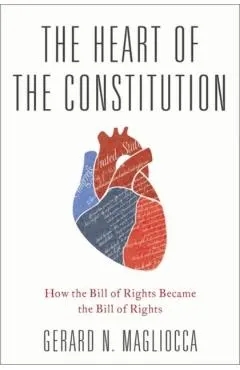
The Heart of the Constitution: How the Bill of Rights Became the Bill of Rights
nThis is the untold story of the most celebrated part of the Constitution.
Încă îl urmărimCum s-a mișcat prețul
Ce am observat noi
la minimToate cifrele de mai sus ies din ce am notat noi, în fiecare noapte. Nu le-am luat de nicăieri.
În fiecare zi luăm cel mai mic preț dintre toate magazinele și îl punem pe grafic. Linia verde e cel mai jos a coborât în ultima lună.
Lasă-ne adresa și îți scriem dacă scade sub —. Un singur e-mail, când chiar se întâmplă ceva. Îți cerem întâi o confirmare, și te poți retrage oricând dintr-un click.
Ce zice magazinul despre el
nThis is the untold story of the most celebrated part of the Constitution. Until the twentieth century, few Americans called the first ten constitutional amendments drafted by James Madison in 1789 and ratified by the states in 1791 the Bill of Rights. Even more surprising, when people finally started doing so between the Spanish-American War and World War II, the Bill of Rights was usually invoked to justify increasing rather than restricting the authority of the federal government. President Franklin D. Roosevelt played a key role in that development, first by using the Bill of Rights to justify the expansion of national regulation under the New Deal, and then by transforming the Bill of Rights into a patriotic rallying cry against Nazi Germany. It was only after the Cold War began that the Bill of Rights took on its modern form as the most powerful symbol of the limits on government power. nThese are just some of the revelations about the Bill of Rights in Gerard Magliocca's The Heart of the Constitution. For example, we are accustomed to seeing the Bill of Rights at the end of the Constitution, but Madison wanted to put them in the middle of the document. Why was his plan rejected and what impact did that have on constitutional law? Today we also venerate the first ten amendments as the Bill of Rights, but many Supreme Court opinions say that only the first eight or first nine amendments. Why was that and why did that change? n nThe Bill of Rights that emerges from Magliocca's fresh historical examination is a living text that means something different for each generation and reflects the great ideas of the Constitution--individual freedom, democracy, states' rights, judicial review, and national power in time of crisis. nn
Descrierea e luată de la Libris.
Produse similare din Drept & administrație
Vezi categoria →