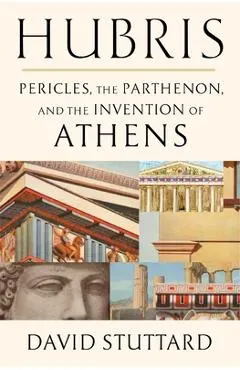
Hubris: Pericles, the Parthenon, and the Invention of Athens
nA new perspective on ancient Athens at the height of its powers, reinterpreting the city's supposed Golden Age as a period of ruinous culture wars.
Încă îl urmărimCum s-a mișcat prețul
Ce am observat noi
la minimToate cifrele de mai sus ies din ce am notat noi, în fiecare noapte. Nu le-am luat de nicăieri.
În fiecare zi luăm cel mai mic preț dintre toate magazinele și îl punem pe grafic. Linia verde e cel mai jos a coborât în ultima lună.
Lasă-ne adresa și îți scriem dacă scade sub —. Un singur e-mail, când chiar se întâmplă ceva. Îți cerem întâi o confirmare, și te poți retrage oricând dintr-un click.
Ce zice magazinul despre el
nA new perspective on ancient Athens at the height of its powers, reinterpreting the city's supposed Golden Age as a period of ruinous culture wars. n nThe age of Pericles, in the fifth century BC, is often described as the Golden Age of Athens. The city witnessed a flowering of philosophy, art, and architecture--including an ambitious building program, with the Parthenon its centerpiece. But as David Stuttard shows in this vivid account, the seemingly triumphant city was in fact riven by conflict and contradiction. Though nominally a democracy, Athens led a tyrannical empire. And for Pericles and his circle, the Parthenon was less a holy place than a propaganda vehicle. Its sculptures carried the message that Athenians, beloved by the gods, were nearly divine in their own right--which to many Greeks smacked of hubris. n nAs long as things went well, Athenian democracy appeared to prosper. But just a year after the Parthenon was finished, Athens was at war with Sparta; a plague killed a third of the population, including Pericles; and earthquakes razed much of the city. In the wake of what seemed like divine retribution, popular outrage against those accused of undermining state religion was so strong that it took the execution of Socrates to lance the boil. n nHubris offers dramatic portraits of key figures like Pheidias, who sculpted the monumental statue of Athena yet fell prey to charges of impiety; Themistocles, who built the Athenian navy but died an exile in enemy lands; and Alcibiades, the psychopathic playboy whose mercurial ego hastened his city's defeat. To understand the Parthenon and the Athens that built it, Stuttard reasons, we must recognize the tensions among the city's rivalrous families, generations, and social classes, whose visions of their place in the world ultimately proved incompatible.n
Descrierea e luată de la Libris.
Produse similare din Istorie & societate
Vezi categoria →