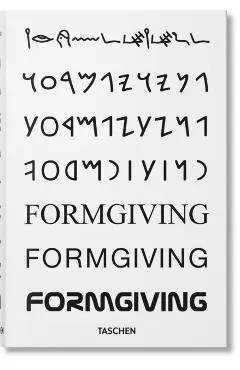
Big. Formgiving. an Architectural Future History
nFormgiving, the new book by BIG (Bjarke Ingels Group), is a visionary attempt to look at the horizon of time.
A fost și mai ieftin — l-am prins la 347,20 leiCum s-a mișcat prețul
Ce am observat noi
peste minimToate cifrele de mai sus ies din ce am notat noi, în fiecare noapte. Nu le-am luat de nicăieri.
În fiecare zi luăm cel mai mic preț dintre toate magazinele și îl punem pe grafic. Linia verde e cel mai jos a coborât în ultima lună.
Lasă-ne adresa și îți scriem dacă scade sub —. Un singur e-mail, când chiar se întâmplă ceva. Îți cerem întâi o confirmare, și te poți retrage oricând dintr-un click.
Ce zice magazinul despre el
nFormgiving, the new book by BIG (Bjarke Ingels Group), is a visionary attempt to look at the horizon of time. The Danish word for design is formgivning, which literally means to give form to that which has not yet taken shape. In other words, to give form to the future. Using our power to give form, rather than allowing the future to take shape, is more important now than ever, as humankind's impact on the planet continues to increase and pose ever greater challenges to all life forms. Architecture plays a special role by proposing spaces for our lives that are fragments of the future in the making. William Gibson's words embody architecture's role perfectly: The future is already here--it's just not evenly distributed.
With Formgiving. An Architectural Future History, BIG presents the third part of its TASCHEN trilogy, which began with Yes is More, one of the most successful architectural books of its generation, and continued with Hot to Cold. An Odyssey of Architectural Adaptation. The book is presented in a timeline, stretching from the Big Bang into the most distant future. Projects are structured around six strands of evolution--Making, Sensing, Sustaining, Thinking, Healing, and Moving--the multimedia-based, interdisciplinary concepts encompassing the building industry. Culture, climate, and landscape, as well as all the energies derived from the elements--the thermal mass of the ocean, the dynamics of currents, the energy and warmth of the sun, the power of the wind--are incorporated into these projects. Throughout more than 700 pages, Bjarke Ingels presents his personal selection of projects, including the 12,000-square-meter LEGO House in Denmark, the human-made ecosystems floating on oceans, the redesign of a World War II bunker into a contemplative museum, and the ski slope-infused power plant celebrating Copenhagen's commitment to carbon neutrality. Through architecture and design, BIG gives shape to a sustainable and simultaneously colorful world.
Bjarke Ingels: We discovered that remote collaboration isn't as bad as we thought. In fact, by not having to be physically present everywhere all the time, we have been afforded the luxury of being mentally present instead. Suddenly local talent became global talent....] Rather than being seduced by the material or coerced by the power of consensus, remote collaboration may afford us a new clarity in how we turn principles into design principles--how we turn values into volume
Descrierea e luată de la Libris.
Alte cărți de Taschen

Produse similare din Istorie & societate
Vezi categoria →