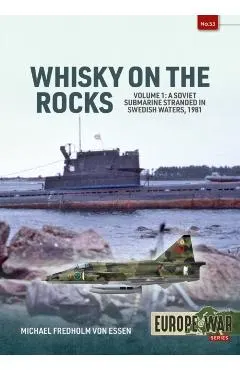
Whiskey on the Rocks Volume 1: A Soviet Submarine Stranded in Swedish Waters, 1981
This book describes and analyses the events surrounding the Soviet Navy Whiskey-class submarine of the Baltic Fleet which ran aground on 27 October 1981 on the south coast of Sweden, close to Naval Base…
A fost și mai ieftin — l-am prins la 148,55 leiCum s-a mișcat prețul
Ce am observat noi
peste minimToate cifrele de mai sus ies din ce am notat noi, în fiecare noapte. Nu le-am luat de nicăieri.
În fiecare zi luăm cel mai mic preț dintre toate magazinele și îl punem pe grafic. Linia verde e cel mai jos a coborât în ultima lună.
Lasă-ne adresa și îți scriem dacă scade sub —. Un singur e-mail, când chiar se întâmplă ceva. Îți cerem întâi o confirmare, și te poți retrage oricând dintr-un click.
Ce zice magazinul despre el
This book describes and analyses the events surrounding the Soviet Navy Whiskey-class submarine of the Baltic Fleet which ran aground on 27 October 1981 on the south coast of Sweden, close to Naval Base Karlskrona, one of the largest Swedish military bases. The incident triggered a grave diplomatic and military crisis. n nUpon discovery, Swedish navy and army units quickly surrounded the submarine, and closed off the immediate area. Surveillance of Sweden's sea and land borders intensified. Swedish intelligence stepped up activities against Soviet Navy activities and communications. A tense diplomatic game began over the fate of the stranded submarine and its crew. The Soviets claimed that the submarine had entered Swedish waters by accident, and demanded that it be allowed to leave without further inspection of the vessel or interrogation of its crew. The Swedes demanded further clarification with regard to the submarine's mission and activities. Meanwhile, Swedish technical intelligence concluded that the submarine carried nuclear weapons, ultimately identified as torpedoes with nuclear warheads. The submarine crew took measures to blow up the submarine, in case Swedish special forces would storm the vessel - a contingency that the Swedish Armed Forces indeed prepared for. n nTo exacerbate the political and military crisis, Swedish intelligence and naval reconnaissance noted the unannounced arrival of a number of Soviet warships which anchored just outside Swedish territorial waters. The Soviet naval task force, commanded by Vice Admiral Aleksey Kalinin on the destroyer Obraztsovyy eventually consisted of more than ten Soviet warships. In response, Sweden's Prime Minister Thorbjörn Fälldin ordered the Armed Forces to defend the border, should the Soviets attempt a rescue of the stranded submarine. n nAt the time, the international media saw the incident as evidence of extensive Soviet underwater activities in Swedish waters. The Swedish Armed Forces concluded that the violation was deliberate and part of illegal intelligence collection directed against Sweden. Yet, others argued that the violation was due to incompetence and substandard technical equipment rather than a conscious policy of aggression. n nIn this book, Michael Fredholm von Essen describes the submarine incident, and presents new research on what happened based on recently declassified Swedish, Soviet, and U.S. military intelligence archival documents. He details the submar
Descrierea e luată de la Libris.
Produse similare din Diverse
Vezi categoria →