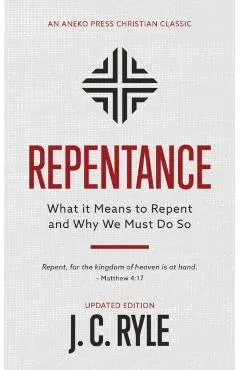
Repentance: What it Means to Repent and Why We Must Do So
Ryle, J. C.: - John Charles Ryle (1816-1900) graduated from Eton and Oxford and then pursued a career in politics, but due to lack of funds, he entered the clergy of the Church of England.
Încă îl urmărimCum s-a mișcat prețul
Ce am observat noi
la minimToate cifrele de mai sus ies din ce am notat noi, în fiecare noapte. Nu le-am luat de nicăieri.
În fiecare zi luăm cel mai mic preț dintre toate magazinele și îl punem pe grafic. Linia verde e cel mai jos a coborât în ultima lună.
Lasă-ne adresa și îți scriem dacă scade sub —. Un singur e-mail, când chiar se întâmplă ceva. Îți cerem întâi o confirmare, și te poți retrage oricând dintr-un click.
Ce zice magazinul despre el
Ryle, J. C.: - John Charles Ryle (1816-1900) graduated from Eton and Oxford and then pursued a career in politics, but due to lack of funds, he entered the clergy of the Church of England. He was a contemporary of Spurgeon, Moody, Mueller, and Taylor and read the great theologians like Wesley, Bunyan, Knox, Calvin, and Luther. These all influenced Ryle's understanding and theology. Ryle began his writing career with a tract following the Great Yarmouth suspension bridge tragedy, where more than a hundred people drowned. He gained a reputation for straightforward preaching and evangelism. He travelled, preached, and wrote more than 300 pamphlets, tracts, and books, including Expository Thoughts on the Gospels, Principles for Churchmen, and Christian Leaders of the Eighteenth Century. Ryle used the royalties from his writing to pay his father's debts, but he also felt indebted to that ruin for changing the direction of his life. He was recommended by Prime Minister Benjamin Disraeli to be Bishop of Liverpool where he ended his career in 1900.
Descrierea e luată de la Libris.
Produse similare din Religie & spiritualitate
Vezi categoria →