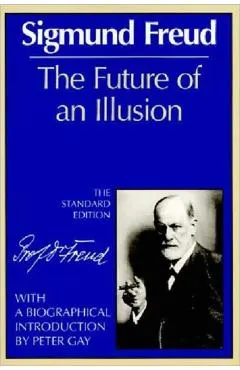
The Future of an Illusion
nIn the manner of the eighteenth-century philosophe, Freud argued that religion and science were mortal enemies.
A fost și mai ieftin — l-am prins la 69,19 leiCum s-a mișcat prețul
Ce am observat noi
peste minimToate cifrele de mai sus ies din ce am notat noi, în fiecare noapte. Nu le-am luat de nicăieri.
În fiecare zi luăm cel mai mic preț dintre toate magazinele și îl punem pe grafic. Linia verde e cel mai jos a coborât în ultima lună.
Lasă-ne adresa și îți scriem dacă scade sub —. Un singur e-mail, când chiar se întâmplă ceva. Îți cerem întâi o confirmare, și te poți retrage oricând dintr-un click.
Ce zice magazinul despre el
nIn the manner of the eighteenth-century philosophe, Freud argued that religion and science were mortal enemies. Early in the century, he began to think about religion psychoanalytically and to discuss it in his writings. ?The Future of an Illusion ?(1927), Freud's best known and most emphatic psychoanalytic exploration of religion, is the culmination of a lifelong pattern of thinking. nIn the manner of the eighteenth-century philosophe, Freud argued that religion and science were mortal enemies. Early in the century, he began to think about religion psychoanalytically and to discuss it in his writings. ?The Future of an Illusion ?(1927), Freud's best known and most emphatic psychoanalytic exploration of religion, is the culmination of a lifelong pattern of thinking. nIn the manner of the eighteenth-century philosophe, Freud argued that religion and science were mortal enemies. Early in the century, he began to think about religion psychoanalytically and to discuss it in his writings. ?The Future of an Illusion ?(1927), Freud's best known and most emphatic psychoanalytic exploration of religion, is the culmination of a lifelong pattern of thinking. nIn the manner of the eighteenth-century philosophe, Freud argued that religion and science were mortal enemies. Early in the century, he began to think about religion psychoanalytically and to discuss it in his writings. ?The Future of an Illusion ?(1927), Freud's best known and most emphatic psychoanalytic exploration of religion, is the culmination of a lifelong pattern of thinking. nIn the manner of the eighteenth-century philosophe, Freud argued that religion and science were mortal enemies. Early in the century, he began to think about religion psychoanalytically and to discuss it in his writings. ?The Future of an Illusion ?(1927), Freud's best known and most emphatic psychoanalytic exploration of religion, is the culmination of a lifelong pattern of thinking. nIn the manner of the eighteenth-century philosophe, Freud argued that religion and science were mortal enemies. Early in the century, he began to think about religion psychoanalytically and to discuss it in his writings. ?The Future of an Illusion ?(1927), Freud's best known and most emphatic psychoanalytic exploration of religion, is the culmination of a lifelong pattern of thinking. nIn the manner of the eighteenth-century philosophe, Freud argued that religion and science were mortal enemies. Early in the century, he began to thin
Descrierea e luată de la Libris.
Alte cărți de Sigmund Freud






Produse similare din Psihologie & filosofie
Vezi categoria →