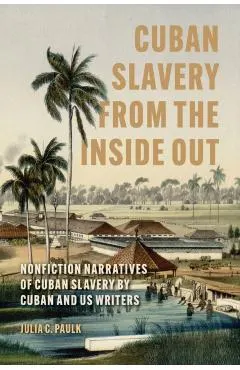
Cuban Slavery from the Inside Out: Nonfiction Narratives of Cuban Slavery by Cuban and Us Writers
nCuban Slavery from the Inside Out: Nonfiction Narratives of Cuban Slavery by Cuban and US Writers is a critical exploration of how nineteenth-century nonfiction texts--written by authors from both Cuba and the
Încă îl urmărimCum s-a mișcat prețul
Ce am observat noi
la minimToate cifrele de mai sus ies din ce am notat noi, în fiecare noapte. Nu le-am luat de nicăieri.
În fiecare zi luăm cel mai mic preț dintre toate magazinele și îl punem pe grafic. Linia verde e cel mai jos a coborât în ultima lună.
Lasă-ne adresa și îți scriem dacă scade sub —. Un singur e-mail, când chiar se întâmplă ceva. Îți cerem întâi o confirmare, și te poți retrage oricând dintr-un click.
Ce zice magazinul despre el
nCuban Slavery from the Inside Out: Nonfiction Narratives of Cuban Slavery by Cuban and US Writers is a critical exploration of how nineteenth-century nonfiction texts--written by authors from both Cuba and the United States--documented, rationalized, and contested the institution of slavery in Cuba. Though separated by language and national identity, both countries shared foundational beliefs in racial hierarchy and imperial control, rooted in colonial justifications that evolved from religious and racialized frameworks.n nThe first half of the book focuses on Cuban authors writing from within a slaveholding society. It offers a new interpretation of Juan Francisco Manzano's celebrated autobiography and examines lesser-known artículos de costumbres by writers such as Anselmo Suárez y Romero, which reflect differing levels of complicity with Afro-Cuban plantation culture. It also analyzes rarely discussed passages from the Condesa de Merlin's La Havane, revealing her explicit support for Cuban slavery and her rejection of democratic principles.n nIn the second half, the book turns to US writers whose nonfiction travel narratives and memoirs--by figures such as Maturin Murray Ballou, Julia Ward Howe, and Eliza McHatton Ripley--shed light on how US perceptions of Cuban slavery were shaped by longstanding Hispanophobic ideologies. These texts illustrate how US racial supremacy and imperial ambition drew on and reinforced the same colonial logic that underpinned slavery in Cuba.n nDrawing from literary analysis, historical context, and decolonial critique, Cuban Slavery from the Inside Out reveals how narratives about Cuban slavery helped shape transnational ideas of race, power, and resistance. It is an essential resource for scholars of Cuban history, Atlantic slavery, hemispheric American studies, and the lasting legacies of colonialism.n
Descrierea e luată de la Libris.
Produse similare din Istorie & societate
Vezi categoria →