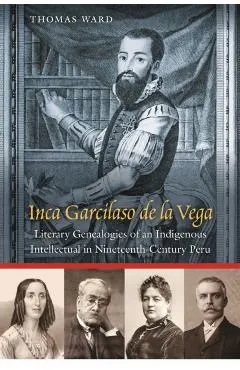
Inca Garcilaso de la Vega: Literary Genealogies of an Indigenous Intellectual in Nineteenth-Century Peru
nThomas Ward examines Inca Garcilaso de la Vega's seventeenth-century work and how it influenced post-independence Peruvian literature in the nineteenth century.
Încă îl urmărimCum s-a mișcat prețul
Ce am observat noi
la minimToate cifrele de mai sus ies din ce am notat noi, în fiecare noapte. Nu le-am luat de nicăieri.
În fiecare zi luăm cel mai mic preț dintre toate magazinele și îl punem pe grafic. Linia verde e cel mai jos a coborât în ultima lună.
Lasă-ne adresa și îți scriem dacă scade sub —. Un singur e-mail, când chiar se întâmplă ceva. Îți cerem întâi o confirmare, și te poți retrage oricând dintr-un click.
Ce zice magazinul despre el
nThomas Ward examines Inca Garcilaso de la Vega's seventeenth-century work and how it influenced post-independence Peruvian literature in the nineteenth century. As literati struggled to define their fledgling Peruvian Republic, they found inspiration in the dual-heritage author Garcilaso de la Vega's previously banned work, Royal Commentaries.n nWard focuses on four authors who turned back to the colonial-era chronicler Inca Garcilaso de la Vega as they synthesized Inkan tradition into modern national thinking: Juana Manuela Gorriti, Clorinda Matto de Turner, Manuel González Prada, and Ricardo Palma. An element of this cultural dynamic included gender awareness. At the time, women were accepted in the literary establishment much more than they would be in the following century, a fact Ward highlights in this study of the two most famous men authors and the two most famous women authors from this time period. In Inca Garcilaso de la Vega Ward brings gender and ethnic perspectives into a postcolonial discussion of a reality that was striving to establish Peruvian as a bona fide proper noun with substantive denotative and connotative meaning.n
Descrierea e luată de la Libris.
Produse similare din Istorie & societate
Vezi categoria →