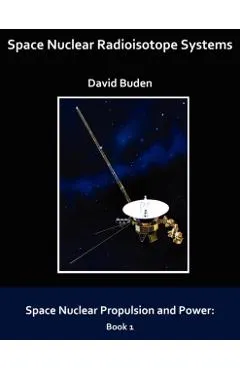
Space Nuclear Radioisotope Systems
For operating in severe environments, long life and reliability, radioisotope power systems have proven to be the most successful of all space power sources.
A fost și mai ieftin — l-am prins la 131,94 leiCum s-a mișcat prețul
Ce am observat noi
peste minimToate cifrele de mai sus ies din ce am notat noi, în fiecare noapte. Nu le-am luat de nicăieri.
În fiecare zi luăm cel mai mic preț dintre toate magazinele și îl punem pe grafic. Linia verde e cel mai jos a coborât în ultima lună.
Lasă-ne adresa și îți scriem dacă scade sub —. Un singur e-mail, când chiar se întâmplă ceva. Îți cerem întâi o confirmare, și te poți retrage oricând dintr-un click.
Ce zice magazinul despre el
For operating in severe environments, long life and reliability, radioisotope power systems have proven to be the most successful of all space power sources. Two Voyager missions launched in 1977 to study Jupiter, Saturn, Uranus, Neptune, and their satellites, rings and magnetic fields and continuing to the heliosphere region are still functioning over thirty years later. Radioisotope power systems have been used on the Moon, exploring the planets, and exiting our solar system. There success is a tribute to the outstanding engineering, quality control and attention to details that went into the design and production of radioisotope power generation units. Space nuclear radioisotope systems take the form of using the thermal energy from the decay of radioisotopes and converting this energy to electric power. Reliability and safety are of prime importance. Mission success depends on the ability of being able to safely launch the systems and on having sufficient electrical power over the life of the mission. Graceful power degradation over the life of a mission is acceptable as long as it is within predictable limits. Electrical power conversion systems with inherent redundancy, such as thermoelectric conversion systems, have been favored to date. Also, radioactive decay heat has been used to maintain temperatures in spacecraft at acceptable conditions for other components. This book describes how radioisotope systems work, the requirements and safety design considerations, the various systems that have been developed, and their operational history.
Descrierea e luată de la Libris.
Produse similare din Științe & tehnică
Vezi categoria →