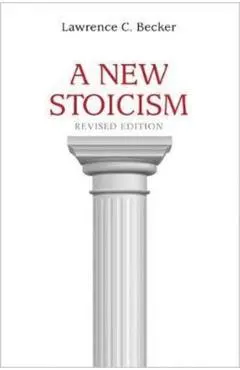
New Stoicism
What would stoic ethics be like today if stoicism had survived as a systematic approach to ethical theory, and if it had coped successfully with the challenges of modern philosophy and experimental science?
Istoric în construcțieEvoluția prețului
Istoricul de preț se construiește — mai avem nevoie de câteva zile de monitorizare pentru un grafic relevant.
Ce arată măsurătorile noastre
istoric în construcțieCifrele sunt calculate exclusiv din prețurile înregistrate de noi, zilnic, la magazinele monitorizate.
Graficul arată cel mai mic preț disponibil în fiecare zi, între toate magazinele monitorizate. Linia verde este minimul din ultimele 30 de zile.
Îți trimitem un e-mail când prețul scade sub —. Îți cerem o confirmare pe e-mail înainte de a-ți trimite orice alertă și te poți dezabona oricând.
Despre acest produs
What would stoic ethics be like today if stoicism had survived as a systematic approach to ethical theory, and if it had coped successfully with the challenges of modern philosophy and experimental science? What would stoic ethics be like today if stoicism had survived as a systematic approach to ethical theory, if it had coped successfully with the challenges of modern philosophy and experimental science? A New Stoicism proposes an answer to that question, offered from within the stoic tradition but without the metaphysical and psychological assumptions that modern philosophy and science have abandoned. Lawrence Becker argues that a secular version of the stoic ethical project, based on contemporary cosmology and developmental psychology, provides the basis for a sophisticated form of ethical naturalism, in which virtually all the hard doctrines of the ancient Stoics can be clearly restated and defended. n Becker argues, in keeping with the ancients, that virtue is one thing, not many; that it, and not happiness, is the proper end of all activity; that it alone is good, all other things being merely rank-ordered relative to each other for the sake of the good; and that virtue is sufficient for happiness. Moreover, he rejects the popular caricature of the stoic as a grave figure, emotionally detached and capable mainly of endurance, resignation, and coping with pain. To the contrary, he holds that while stoic sages are able to endure the extremes of human suffering, they do not have to sacrifice joy to have that ability, and he seeks to turn our attention from the familiar, therapeutic part of stoic moral training to a reconsideration of its theoretical foundations. n
Descriere preluată din fișa produsului de la Libris.
Produse similare din Psihologie & filosofie
Vezi categoria →