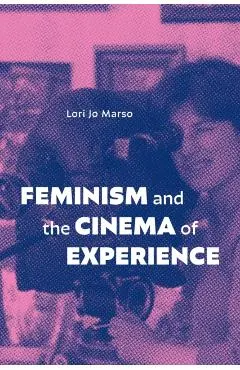
Feminism and the Cinema of Experience
From popular films like Greta Gerwig's Barbie (2023) to Chantal Akerman's avant-garde classic Jeanne Dielman (1975), feminist cinema can provoke discomfort.
Încă îl urmărimCum s-a mișcat prețul
Ce am observat noi
la minimToate cifrele de mai sus ies din ce am notat noi, în fiecare noapte. Nu le-am luat de nicăieri.
În fiecare zi luăm cel mai mic preț dintre toate magazinele și îl punem pe grafic. Linia verde e cel mai jos a coborât în ultima lună.
Lasă-ne adresa și îți scriem dacă scade sub —. Un singur e-mail, când chiar se întâmplă ceva. Îți cerem întâi o confirmare, și te poți retrage oricând dintr-un click.
Ce zice magazinul despre el
From popular films like Greta Gerwig's Barbie (2023) to Chantal Akerman's avant-garde classic Jeanne Dielman (1975), feminist cinema can provoke discomfort. Ambivalence, stasis, horror, cringe-these and other affects refuse the resolution of feeling good or bad, leaving viewers questioning and disoriented. In Feminism and the Cinema of Experience, Lori Jo Marso examines how filmmakers scramble our senses to open up space for encountering and examining the political conditions of patriarchy, racism, and existential anxiety. Building on Akerman's cinematic lexicon and Simone de Beauvoir's phenomenological attention to the lives of girls and women, Marso analyzes film and television by directors ranging from Akerman, Gerwig, Mati Diop, Catherine Breillat, and Joey Soloway to Emerald Fennell, Michaela Coel, Audrey Diwan, Alice Diop, and Julia Ducournau. Through their innovative and intentional uses of camera, sound, editing, and new forms of narrative, these directors use discomfort in order to invite viewers to feel like feminists and to sense the possibility of freedom.
Descrierea e luată de la Libris.
Produse similare din Istorie & societate
Vezi categoria →