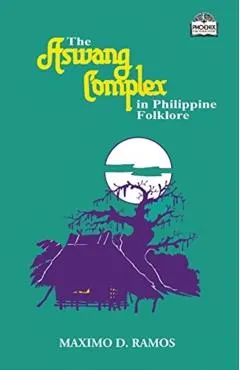
The Aswang Complex in Philippine Folklore
nThe Aswang Complex in Philippine Folklore: With Illustrative Accounts in Vernacular Texts and Translations.
La minimul din 30 de zileCel mai bun preț din fiecare magazin
| Magazin | Preț | Istoric | |
|---|---|---|---|
LB Libris ISBN 9781544056531 |
92,94 lei | la minimul propriu | Vezi în magazin |
Prețurile sunt preluate automat din feed-urile magazinelor și pot varia; prețul valabil este cel din magazin, la finalizarea comenzii. Linkurile către magazine sunt linkuri de parteneriat — nu îți schimbă prețul și nu influențează ordinea ofertelor.
Evoluția prețului
Istoricul de preț se construiește — mai avem nevoie de câteva zile de monitorizare pentru un grafic relevant.
Ce arată măsurătorile noastre
la minimul din 30 de zileCifrele sunt calculate exclusiv din prețurile înregistrate de noi, zilnic, la magazinele monitorizate.
Graficul arată cel mai mic preț disponibil în fiecare zi, între toate magazinele monitorizate. Linia verde este minimul din ultimele 30 de zile.
Îți trimitem un e-mail când prețul scade sub 92,94 lei. Îți cerem o confirmare pe e-mail înainte de a-ți trimite orice alertă și te poți dezabona oricând.
Despre acest produs
nThe Aswang Complex in Philippine Folklore: With Illustrative Accounts in Vernacular Texts and Translations.
This book is a bold attempt to present to the reader and to students of Filipino society and culture one of the dominant Filipino beliefs, the aswang. For some strange reason the belief has never been explored for its usefulness in the field of literature or social studies. Even educators shy away from it, branding the belief as superstitious and therefore hot to be perpetuated. While this view is entertained, however, there is continued use in the schools-including the nursery schools-of Western tales like Hansel and Gretel, 'Rapunzel, Snow White, and so forth, dealing with witches, dwarfs, and other people of lower mythology. It is sad to note that while we accept these stories as entertaining to our children, we reject our own folktales about equivalent characters as superstitious and undesirable.
It is about time that we changed our perspective, that we accepted our own literary heritage and used it if we are to make education meaningful to our children. Maximo D. Ramos has provided us with one way to achieve this. Of course the present volume is only one of his many works on Philippine folklore.
While he presents the materials in this book as folklore, these can also be regarded as ethnographic data in that they deal with one of the dominant aspects of Filipino folk culture. The aswang belief may be viewed as socially functional in many communities. Our own field notes on the subject matter indicate that aswang tales are used by many people as a medium of social control. For example, when a child frets at night or becomes unruly during the day, adult members of the family or sibling caretakers generally use the aswang belief as a means of quieting the child or of disciplining him. When one wishes to protect his fields from unnecessary trespass by others, all he has to do is make it known that an aswang haunts the place and no one will dare enter the premises, especially at night. Deviant behavior is also handled through avoidance, and the aswang label is handy for this purpose. Once the label is set, deviants are either coerced into conformity to what is acceptable behavior or are effectively deprived of their legitimate status in the community.
Thus seen, it is understandable that the aswang belief has persisted in our society over such a long period of time.
Descriere preluată din fișa produsului de la Libris.
Alte cărți de Maximo D. Ramos
Produse similare din Istorie & societate
Vezi categoria →