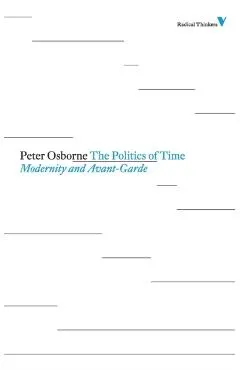
Politics of Time: Modernity and Avant-Garde
nIf Aristotle sought to understand time through change, might we not reverse the procedure and seek to understand change through time?
Încă îl urmărimCum s-a mișcat prețul
Ce am observat noi
la minimToate cifrele de mai sus ies din ce am notat noi, în fiecare noapte. Nu le-am luat de nicăieri.
În fiecare zi luăm cel mai mic preț dintre toate magazinele și îl punem pe grafic. Linia verde e cel mai jos a coborât în ultima lună.
Lasă-ne adresa și îți scriem dacă scade sub —. Un singur e-mail, când chiar se întâmplă ceva. Îți cerem întâi o confirmare, și te poți retrage oricând dintr-un click.
Ce zice magazinul despre el
nIf Aristotle sought to understand time through change, might we not reverse the procedure and seek to understand change through time? Once we do this, argues Peter Osborne, it soon becomes clear that ideas such as avant-garde, modern, postmodern and tradition--which are usually only treated as markets for empirically discrete periods, movements or styles--are best understood as categories of historical totalization. More specifically, Osborne claims, such ideas involve distinct temporalizations of history, giving rise to conflicting politics of time. nHis book begins with a consideration of the main aspects of modernity and develops though a series of critical engagements with the major twentieth-century positions in the philosophy of history. He concludes with a fascinating history of the avant-garde intervention into the temporality of everyday life in surrealism, the situationists and the work of Henri Lefebvre.n
Descrierea e luată de la Libris.
Produse similare din Psihologie & filosofie
Vezi categoria →