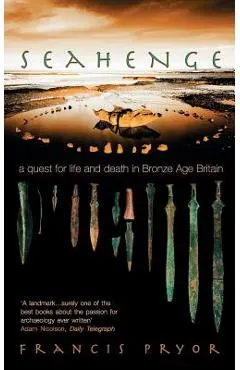
Seahenge: A Quest for Life and Death in Bronze Age Britain
n nA lively and authoritative investigation into the lives of our ancestors, based on the revolution in the field of Bronze Age archaeology which has been taking place in Norfolk and the Fenlands over the last
Încă îl urmărimCum s-a mișcat prețul
Ce am observat noi
la minimToate cifrele de mai sus ies din ce am notat noi, în fiecare noapte. Nu le-am luat de nicăieri.
În fiecare zi luăm cel mai mic preț dintre toate magazinele și îl punem pe grafic. Linia verde e cel mai jos a coborât în ultima lună.
Lasă-ne adresa și îți scriem dacă scade sub —. Un singur e-mail, când chiar se întâmplă ceva. Îți cerem întâi o confirmare, și te poți retrage oricând dintr-un click.
Ce zice magazinul despre el
n nA lively and authoritative investigation into the lives of our ancestors, based on the revolution in the field of Bronze Age archaeology which has been taking place in Norfolk and the Fenlands over the last twenty years, and in which the author has played a central role.n nOne of the most haunting and enigmatic archaeological discoveries of recent times was the uncovering in 1998 at low tide of the so-called Seahenge off the north coast of Norfolk. This circle of wooden planks set vertically in the sand, with a large inverted tree-trunk in the middle, likened to a ghostly 'hand reaching up from the underworld', has now been dated back to around 2020 BC. The timbers are currently (and controversially) in the author's safekeeping at Flag Fen.n nFrancis Pryor and his wife (an expert in ancient wood-working and analysis) have been at the centre of Bronze Age fieldwork for nearly 30 years, piecing together the way of life of Bronze Age people, their settlement of the landscape, their religion and rituals. The famous wetland sites of the East Anglian Fens have preserved ten times the information of their dryland counterparts like Stonehenge and Avebury, in the form of pollen, leaves, wood, hair, skin and fibre found 'pickled' in mud and peat.n nSeahenge demonstrates how much Western civilisation owes to the prehistoric societies that existed in Europe in the last four millennia BC.n
Descrierea e luată de la Libris.
Alte cărți de Francis Pryor

Produse similare din Istorie & societate
Vezi categoria →