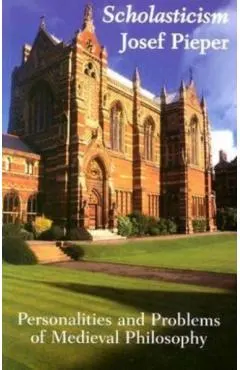
Scholasticism: Personalities and Problems of Medieval Philosophy
No better guide over the thousand-year period called the Middle Ages could be found than Josef Pieper.
A fost și mai ieftin — l-am prins la 80,60 leiCum s-a mișcat prețul
Ce am observat noi
peste minimToate cifrele de mai sus ies din ce am notat noi, în fiecare noapte. Nu le-am luat de nicăieri.
În fiecare zi luăm cel mai mic preț dintre toate magazinele și îl punem pe grafic. Linia verde e cel mai jos a coborât în ultima lună.
Lasă-ne adresa și îți scriem dacă scade sub —. Un singur e-mail, când chiar se întâmplă ceva. Îți cerem întâi o confirmare, și te poți retrage oricând dintr-un click.
Ce zice magazinul despre el
No better guide over the thousand-year period called the Middle Ages could be found than Josef Pieper. In this amazing tour de monde medievale, he moves easily back and forth between the figures and the doctrines that made medieval philosophy unique in Western thought. After reflecting on the invidious implications of the phrase Middle Ages, Pieper turns to the fascinating personality of Boethius whose contribution to prison literature, The Consolation of Philosophy, is second only to the Bible in the number of manuscript copies. The Neo-Platonic figures - Dionysius and Eriugena - are the occasion for a discussion of negative theology. The treatment of Anselm of Canterbury's proof of God's existence involves later voices, e.g., Kant. Like other historians, Pieper is enamored of the twelfth century, which is regularly eclipsed by accounts of the thirteenth century. Pieper does justice to both. His account of the rivalry between Peter Abelard and Bernard of Clairvaux is masterful, nor does he fail to give John of Salisbury the space he deserves. n The account is broken by the gradual replacement of the synthesis of faith and reason that had been achieved in the early Middle Ages by a new one that made use of Aristotle. Pieper gives a thorough and lively account of the struggle between Aristotelians and anti-Aristotelians, and the famous condemnations that put the effort of Saint Thomas Aquinas at risk. But the Summa theologiae is regarded by Pieper as the unique achievement of the period. n If the early centuries, the medieval period, can be seen as moving toward the thirteenth and Thomas's unique achievement, subsequent centuries saw the decline of scholasticism and theappearance of harbingers of modern philosophy. n The book closes with Pieper's thoughts on the permanent philosophical and theological significance of scholasticism and the Middle Ages. Once again, wearing his learning lightly, writing with a clarity that delights, Josef Pieper has taken the field from stuffier and more extended accounts.
Descrierea e luată de la Libris.
Alte cărți de Josef Pieper


Produse similare din Psihologie & filosofie
Vezi categoria →