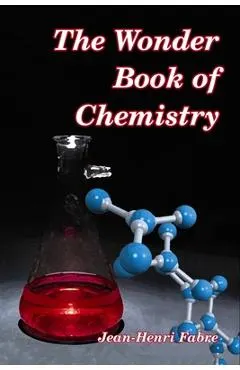
The Wonder Book of Chemistry
nA wondrous introduction to the world of chemistry, designed specifically for younger readers with the intention of arousing their interest in science.
Încă îl urmărimCum s-a mișcat prețul
Ce am observat noi
la minimToate cifrele de mai sus ies din ce am notat noi, în fiecare noapte. Nu le-am luat de nicăieri.
În fiecare zi luăm cel mai mic preț dintre toate magazinele și îl punem pe grafic. Linia verde e cel mai jos a coborât în ultima lună.
Lasă-ne adresa și îți scriem dacă scade sub —. Un singur e-mail, când chiar se întâmplă ceva. Îți cerem întâi o confirmare, și te poți retrage oricând dintr-un click.
Ce zice magazinul despre el
nA wondrous introduction to the world of chemistry, designed specifically for younger readers with the intention of arousing their interest in science.
Using everyday objects found around the house or in the local store, this book is set as a storyline in which an Uncle Paul teaches his two nephews the secrets behind building an artificial volcano; how to set metals on fire; the flammable properties of water; how to make a fire hotter; how to make soap bubbles rise; how to make invisible ink; the science behind effervescent wines, ciders, and beer; how plants feed on carbon, water, and air-and much, much more.
From the translator's preface: The personal, biographical interest of the book is not to be overlooked. The boys Jules and Emile are the author's own children; faithfully portrayed even to the names they bear. In his captivating fashion the man of vast learning makes himself at once teacher and comrade to his young hearers, and we learn that 'his chemistry lessons especially had a great success.'With apparatus of his own devising and of the simplest kind he could perform a host of elementary experiments, the apparatus as a rule consisting of the most ordinary materials, such as a common flask or bottle, an old mustard-pot, a tumbler, a goose-quill or a pipe-stem.
A series of astonishing phenomena amazed their wondering eyes. He made them see, touch, taste, handle, and smell, and always 'the hand assisted the word, ' always 'the example accompanied the precept, ' for no one more fully valued the profound maxim, so neglected and misunderstood, that 'to see is to know.'Though living creatures necessarily claimed the naturalist's first affections, he nonetheless 'animates even the simple elementary bodies, celebrating the marvelous activities of the air, the violence of chlorin, the metamorphoses of carbon, the miraculous bridals of phosphorus, ' and the 'splendors which accompany the birth of a drop of water.'CONTENTSTranslator's Preface nChapter I: Introduction nChapter II: Mixing and Combining nChapter III: The Slice of Toast nChapter IV: Simple Substances nChapter V: Compound Substances nChapter VI: Experiments with the Breath nChapter VII: Experiments with Air nChapter VIII: Further Experiments with Air nChapter IX: The Two Sparrows nChapter X: Burning Phosphorus nChapter XI: Burning Metals nChapter XII: Salts nChapter XIII: A Talk on Tools nChapter XIV: Oxygen nChapter XV: Air and Combustion nChapter XVI: Rust
Descrierea e luată de la Libris.
Produse similare din Științe & tehnică
Vezi categoria →