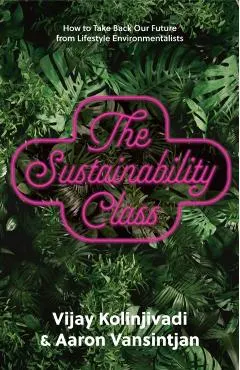
The Sustainability Class: How to Take Back Our Future from Lifestyle Environmentalists
An original argument that environmental sustainability has been co-opted by the urban elite, along with examples from around the world of ways we can save our planet nWith more urban residents interested in liv
A fost și mai ieftin — l-am prins la 124,74 leiCum s-a mișcat prețul
Ce am observat noi
peste minimToate cifrele de mai sus ies din ce am notat noi, în fiecare noapte. Nu le-am luat de nicăieri.
În fiecare zi luăm cel mai mic preț dintre toate magazinele și îl punem pe grafic. Linia verde e cel mai jos a coborât în ultima lună.
Lasă-ne adresa și îți scriem dacă scade sub —. Un singur e-mail, când chiar se întâmplă ceva. Îți cerem întâi o confirmare, și te poți retrage oricând dintr-un click.
Ce zice magazinul despre el
An original argument that environmental sustainability has been co-opted by the urban elite, along with examples from around the world of ways we can save our planet nWith more urban residents interested in living sustainably, we have seen the emergence of a green-tech service economy premised around a kind of lifestyle environmentalism. Concerns over sustainability have been co-opted to sell a high-tech urban lifestyle, causing cities to become more unequal and unsustainable, cementing the elite's status, and excluding the working class, racial minorities, and women. n Focusing on what they term the sustainability class--a woke and wealthy set of urbanites convinced that sustainability can be achieved through individual actions, green and smart development, and technological efficiency--authors Vijay Kolinjivadi and Aaron Vansintjan challenge many of the popular ideas about saving the planet. It is actually the approach of the sustainability class itself, the authors argue, that is unsustainable; improving eco-efficiency within a capitalist, growth-oriented system will neither save us nor lead to true sustainability. n Vivid and conversational but also challenging, The Sustainability Class explores how, from Los Angeles to Hanoi, and from Google's smart city in Toronto to Abu Dhabi, investors all over the world are rushing to capitalize on going green. By contrast, using real-world examples of housing and energy strategies, food production, transport, tourism, and waste management, they show how ordinary people around the world are truly building a more ecological future through collective organization in their everyday lives. In doing so, they reclaim ecology and true sustainability for everyone, so it is no longer just the domain of an elite who seek to devise more sophisticated ways to shift the costs of their greener than thou lifestyles onto the rest of us. nAn original argument that environmental sustainability has been co-opted by the urban elite, along with examples from around the world of ways we can save our planet Caring for the environment means reclaiming ecology for everyone. --from the introduction n A sustainability apartheid is emerging. n More than ever, urban residents want to be green, yet to cater to their interests, a green-tech service economy has sprung up, co-opting well-intentioned concerns over sustainability to sell a resource-heavy and exclusive lifestyle environmentalism. This has made cities m
Descrierea e luată de la Libris.
Produse similare din Business & economie
Vezi categoria →