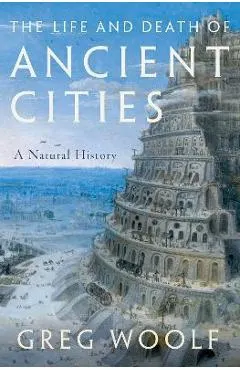
The Life and Death of Ancient Cities: A Natural History
nThe dramatic story of the rise and collapse of Europe's first great urban experiment The growth of cities around the world in the last two centuries is the greatest episode in our urban history, but it is not…
Încă îl urmărimCum s-a mișcat prețul
Ce am observat noi
la minimToate cifrele de mai sus ies din ce am notat noi, în fiecare noapte. Nu le-am luat de nicăieri.
În fiecare zi luăm cel mai mic preț dintre toate magazinele și îl punem pe grafic. Linia verde e cel mai jos a coborât în ultima lună.
Lasă-ne adresa și îți scriem dacă scade sub —. Un singur e-mail, când chiar se întâmplă ceva. Îți cerem întâi o confirmare, și te poți retrage oricând dintr-un click.
Ce zice magazinul despre el
nThe dramatic story of the rise and collapse of Europe's first great urban experiment The growth of cities around the world in the last two centuries is the greatest episode in our urban history, but it is not the first. Three thousand years ago most of the Mediterranean basin was a world of villages; a world without money or writing, without temples for the gods or palaces for the nmighty. Over the centuries that followed, however, cities appeared in many places around the Inland Sea, built by Greeks and Romans, and also by Etruscans and Phoenicians, Tartessians and Lycians, and many others. Most were tiny by modern standards, but they were the building blocks of all the nstates and empires of antiquity. The greatest--Athens and Corinth, Syracuse and Marseilles, Alexandria and Ephesus, Persepolis and Carthage, Rome and Byzantium--became the powerhouses of successive ancient societies, not just political centers but also the places where ancient art and literatures nwere created and accumulated. And then, half way through the first millennium, most withered away, leaving behind ruins that have fascinated so many who came after. Based on the most recent historical and archaeological evidence, The Life and Death of Ancient Cities provides a sweeping narrative of one of the world's first great urban experiments, from Bronze Age origins to the demise of cities in late antiquity. Greg Woolf chronicles the history of the ancient nMediterranean city, against the background of wider patterns of human evolution, and of the unforgiving environment in which they were built. Richly illustrated, the book vividly brings to life the abandoned remains of our ancient urban ancestors and serves as a stark reminder of the fragility of neven the mightiest of cities. n nThe dramatic story of the rise and collapse of Europe's first great urban experiment The growth of cities around the world in the last two centuries is the greatest episode in our urban history, but it is not the first. Three thousand years ago most of the Mediterranean basin was a world of villages; a world without money or writing, without temples for the gods or palaces for the mighty. Over the centuries that followed, however, cities appeared in many places around the Inland Sea, built by Greeks and Romans, and also by Etruscans and Phoenicians, Tartessians and Lycians, and many others. Most were tiny by modern standards, but they were the build nThe dramatic story of the rise and collaps
Descrierea e luată de la Libris.
Alte cărți de Woolf






Produse similare din Istorie & societate
Vezi categoria →