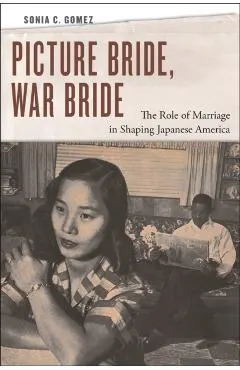
Picture Bride, War Bride: The Role of Marriage in Shaping Japanese America
Examines the role marriage played in the lives of Japanese women during periods of racial exclusion in the United States In 1908 the United States and Japan agreed to limit the migration of Japanese laborers…
Încă îl urmărimCum s-a mișcat prețul
Ce am observat noi
la minimToate cifrele de mai sus ies din ce am notat noi, în fiecare noapte. Nu le-am luat de nicăieri.
În fiecare zi luăm cel mai mic preț dintre toate magazinele și îl punem pe grafic. Linia verde e cel mai jos a coborât în ultima lună.
Lasă-ne adresa și îți scriem dacă scade sub —. Un singur e-mail, când chiar se întâmplă ceva. Îți cerem întâi o confirmare, și te poți retrage oricând dintr-un click.
Ce zice magazinul despre el
Examines the role marriage played in the lives of Japanese women during periods of racial exclusion in the United States In 1908 the United States and Japan agreed to limit the migration of Japanese laborers to the US. The Gentlemen's Agreement of 1908 ushered in an era of exclusion for the Japanese, but an exception was made for Japanese women who migrated as wives of Japanese men. In 1924 that exception would end with the passage of the National Origins Act. Immediately after World War II, Japanese women were once again permitted to enter the US as brides-- this time, however, as the wives of American servicemen stationed throughout Japan. The ban on Japanese immigration would not be lifted until 1952. Picture Bride, War Bride examines how the institution of marriage created pockets of legal and social inclusion for Japanese women during the period of Japanese exclusion. Sonia C. Gomez begins with the first wave of Japanese women's migration in the early twentieth century (picture brides), and ends with the second mass migration of Japanese women after World War II (war brides), to illustrate how popular and political discourse drew on overlapping and conflicting logics to either racially exclude the Japanese or facilitate their inclusion via immigration legislation privileging wives and mothers. Picture Bride, War Bride retells the history of Japanese migration and exclusion by centering women, gender, and sexuality, and in so doing, troubles the inclusion versus exclusion binary. While the Japanese were racially excluded between 1908 and 1952, Japanese wives and mothers were permitted entry because their inclusion served American interests in the Pacific. However, the very rationale enabling their inclusion simultaneously restricted and defined the parameters of their lives within the US. Picture Bride, War Bride serves as a compelling analysis of how the intricate interplay between societal norms and political interests can both harness and contradict the interconnected frameworks of race, gender, and sexuality. nExamines the role marriage played in the lives of Japanese women during periods of racial exclusion in the United States In 1908 the United States and Japan agreed to limit the migration of Japanese laborers to the US. The Gentlemen's Agreement of 1908 ushered in an era of exclusion for the Japanese, but an exception was made for Japanese women who migrated as wives of Japanese men. In 1924 that exception would end with the passage of the N
Descrierea e luată de la Libris.
Produse similare din Istorie & societate
Vezi categoria →