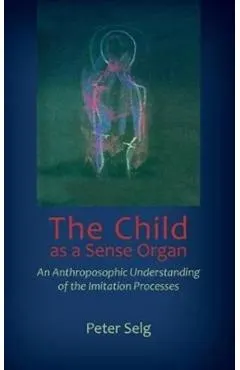
The Child as a Sense Organ: An Anthroposophic Understanding of Imitation Processes
The initial period of childhood is essentially about adapting to and incarnating on Earth and establishing a provisional balance between the spiritual and the physical, between the prenatal cosmic and the…
Încă îl urmărimCum s-a mișcat prețul
Ce am observat noi
la minimToate cifrele de mai sus ies din ce am notat noi, în fiecare noapte. Nu le-am luat de nicăieri.
În fiecare zi luăm cel mai mic preț dintre toate magazinele și îl punem pe grafic. Linia verde e cel mai jos a coborât în ultima lună.
Lasă-ne adresa și îți scriem dacă scade sub —. Un singur e-mail, când chiar se întâmplă ceva. Îți cerem întâi o confirmare, și te poți retrage oricând dintr-un click.
Ce zice magazinul despre el
The initial period of childhood is essentially about adapting to and incarnating on Earth and establishing a provisional balance between the spiritual and the physical, between the prenatal cosmic and the earthly factors. During this time, according to Rudolf Steiner, all the forces of a child's organization emanate from the neurosensory system. . . . By bringing respiration into harmony with neurosensory activity, we draw the spirit-soul element into the child's physical life. Peter Selg investigates how children's early experience of the world begins as an undifferentiated sensory relationship to their phenomenological environment. This aspect of a child's incarnation leads to leaning through imitation and to the process of recognizing the Other as a separate entity with which to interact. In this cogent work, Peter Selg describes the early stages of childhood from the perspectives of conventional scientific and spiritual-scientific-- anthropological and anthroposophic--research with the purpose of encouraging a new educational attitude in working with young children. In his numerous references to early childhood development, this was Rudolf Steiner's most important and urgent purpose. nThe initial period of childhood is essentially about adapting to and incarnating on Earth and establishing a provisional balance between the spiritual and the physical, between the prenatal cosmic and the earthly factors. During this time, according to Rudolf Steiner, all the forces of a child's organization emanate from the neurosensory system. . . . By bringing respiration into harmony with neurosensory activity, we draw the spirit-soul element into the child's physical life. Peter Selg investigates how children's early experience of the world begins as an undifferentiated sensory relationship to their phenomenological environment. This aspect of a child's incarnation leads to learning through imitation and to the process of recognizing the Other as a separate entity with which to interact. In this cogent work, Peter Selg describes the early stages of childhood from the perspectives of conventional scientific and spiritual-scientific-- anthropological and anthroposophic--research with the purpose of encouraging a new educational attitude in working with young children. In his numerous references to early childhood development, this was Rudolf Steiner's most important and urgent purpose. ∞ ∞ ∞ Steiner directed attention to the special character of the<
Descrierea e luată de la Libris.
Alte cărți de Peter Selg
Produse similare din Psihologie & filosofie
Vezi categoria →