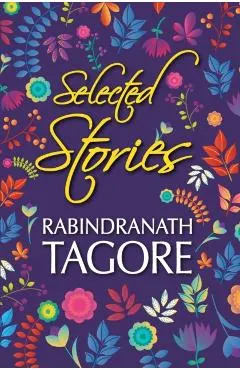
Selected Stories of Rabindranath Tagore
Tagore, Rabindranath: - Rabindranath Tagore (1861-1941) was the youngest son of Debendranath Tagore, a leader of the Brahmo Samaj.
A fost și mai ieftin — l-am prins la 81,77 leiCum s-a mișcat prețul
Ce am observat noi
peste minimToate cifrele de mai sus ies din ce am notat noi, în fiecare noapte. Nu le-am luat de nicăieri.
În fiecare zi luăm cel mai mic preț dintre toate magazinele și îl punem pe grafic. Linia verde e cel mai jos a coborât în ultima lună.
Lasă-ne adresa și îți scriem dacă scade sub —. Un singur e-mail, când chiar se întâmplă ceva. Îți cerem întâi o confirmare, și te poți retrage oricând dintr-un click.
Ce zice magazinul despre el
Tagore, Rabindranath: - Rabindranath Tagore (1861-1941) was the youngest son of Debendranath Tagore, a leader of the Brahmo Samaj. He was educated at home and although at seventeen he was sent to England for formal schooling, he did not finish his studies there. In his mature years, in addition to his many-sided literary activities, he managed the family estates, a project which brought him into close touch with common humanity and increased his interest in social reforms. He also started an experimental school at Shantiniketan where he tried his Upanishadic ideals of education. From time to time he participated in the Indian nationalist movement, though in his own non-sentimental and visionary way; and Gandhi, the political father of modern India, was his devoted friend. Tagore was knighted by the ruling British Government in 1915, but within a few years he resigned the honour as a protest against British policies in India. Tagore had early success as a writer in his native Bengal. With his translations of some of his poems he became rapidly known in the West. In fact, his fame attained a luminous height, taking him across continents on lecture tours and tours of friendship. For the world he became the voice of India's spiritual heritage; and for India, especially for Bengal, he became a great living institution. Although, Tagore wrote successfully in all literary genres, he was first of all a poet. Among his fifty and odd volumes of poetry are Manasi (1890) {The Ideal One}, Sonar Tari (1894) {The Golden Boat}, Gitanjali (1910) {Song Offerings}, Gitimalya (1914) {Wreath of Songs}, and Balaka (1916) {The Flight of Cranes}. The English renderings of his poetry, which include The Gardener (1913), Fruit-Gathering (1916), and The Fugitive (1921), do not generally correspond to particular volumes in the original Bengali; and in spite of its title, Gitanjali: Song Offerings (1912), the most acclaimed of them, contains poems from other works besides its namesake. Tagore's major plays are Raja (1910) {The King of the Dark Chamber}, Dakghar (1912) {The Post Office}, Achalayatan (1912) {The Immovable}, Muktadhara (1922) {The Waterfall}, and Raktakaravi (1926) {Red Oleanders}. He is the author of several volumes of short stories and a number of novels, among them Gora (1910), Ghare-Baire (1916) {The Home and the World}, and Yogayog (1929) {Crosscurrents}. Besides these, he wrote musical dramas, dance dramas, essays of all types, travel diaries, and two autobiographie
Descrierea e luată de la Libris.
Alte cărți de Rabindranath Tagore

Produse similare din Ficțiune & literatură
Vezi categoria →