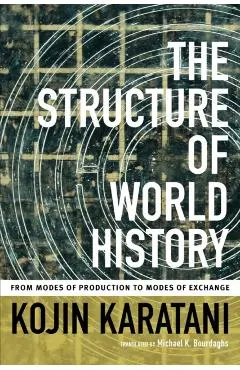
The Structure of World History: From Modes of Production to Modes of Exchange
nIn this major, paradigm-shifting work, Kojin Karatani systematically re-reads Marx's version of world history, shifting the focus of critique from modes of production to modes of exchange.
Încă îl urmărimCum s-a mișcat prețul
Ce am observat noi
la minimToate cifrele de mai sus ies din ce am notat noi, în fiecare noapte. Nu le-am luat de nicăieri.
În fiecare zi luăm cel mai mic preț dintre toate magazinele și îl punem pe grafic. Linia verde e cel mai jos a coborât în ultima lună.
Lasă-ne adresa și îți scriem dacă scade sub —. Un singur e-mail, când chiar se întâmplă ceva. Îți cerem întâi o confirmare, și te poți retrage oricând dintr-un click.
Ce zice magazinul despre el
nIn this major, paradigm-shifting work, Kojin Karatani systematically re-reads Marx's version of world history, shifting the focus of critique from modes of production to modes of exchange. Karatani seeks to understand both Capital-Nation-State, the interlocking system that is the dominant form of modern global society, and the possibilities for superseding it. In The Structure of World History, he traces different modes of exchange, including the pooling of resources that characterizes nomadic tribes, the gift exchange systems developed after the adoption of fixed-settlement agriculture, the exchange of obedience for protection that arises with the emergence of the state, the commodity exchanges that characterize capitalism, and, finally, a future mode of exchange based on the return of gift exchange, albeit modified for the contemporary moment. He argues that this final stage-marking the overcoming of capital, nation, and state-is best understood in light of Kant's writings on eternal peace. The Structure of World History is in many ways the capstone of Karatani's brilliant career, yet it also signals new directions in his thought.
Descrierea e luată de la Libris.
Produse similare din Istorie & societate
Vezi categoria →